Get in Touch with Teng Yang Company


PA (Polyamide)
Hot Melt Adhesive Film
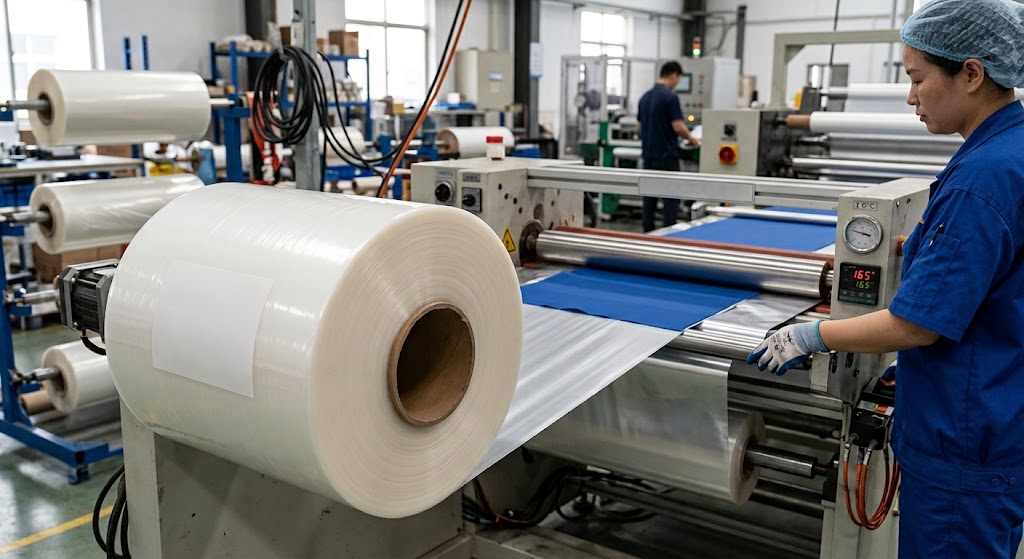
PA (polyamide) hot melt adhesive film replaces sewing and solvent-based glue with a single clean, heat-activated bond line – no open-time solvent evaporation, no needle holes, no stitch puckering. Since Teng Yang manufactures PA film and web as well as EVA, TPU, PES, and PO hot melt chemistries in Shanghai, you can get chemistry-matched adhesive for garment, footwear, leather, heat transfer, reflective, automotive, packaging, and building decoration bonding from one factory-direct supplier.
5
Hot-Melt Chemistries
(TPU / EVA / PA / PES / PO)
(TPU / EVA / PA / PES / PO)
2
Film Formats
With / Without Release Paper
With / Without Release Paper
9
Application Categories Served
OEM
Thickness, Width, Melting Point & Color Customization
Shanghai
Factory-Direct Manufacturing, China
Export-Ready
International Buyer Support
From Sewing & Solvent Glue to Clean PA Bonding, Why Garment, Footwear & Leather Makers Switch
// TECHNICAL CAPABILITIES & WORKFLOW
[FLOW-01] THE NO-SEW CHALLENGE
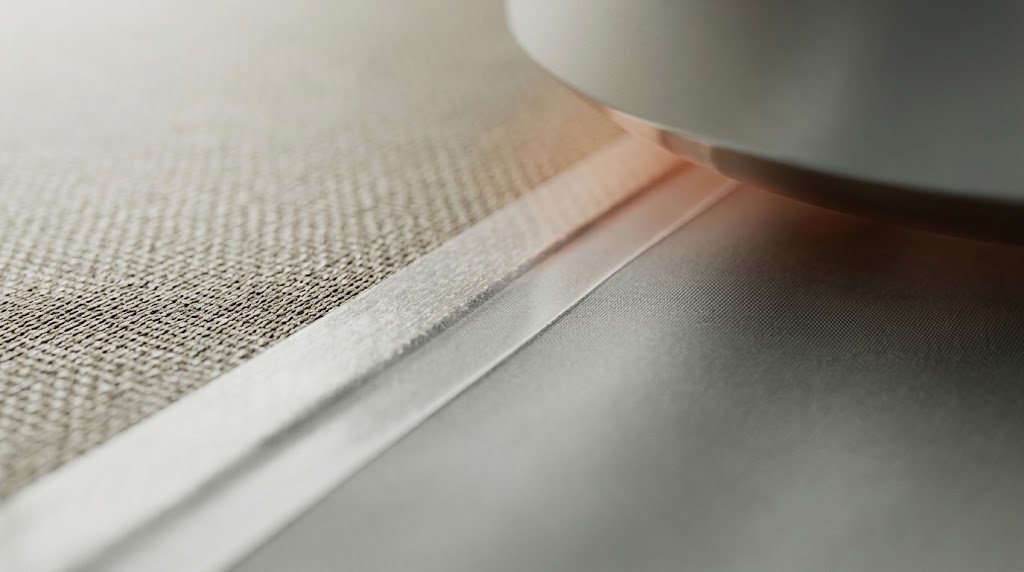
Sewn seams leave needle holes, add thread cost, and an inherently slow step to a high-volume production line that’s difficult to automate. Solvent-based contact adhesives bypass the no-sew challenge, but introduce others: open time that must be managed at the line, VOCs that must be vented by the workshop, and a bond that stays tacky until solvent flash-off is complete. PA (polyamide) hot melt adhesive film avoids both problems: the film is solid at room temperature, and only requires a press or roller to apply heat and light pressure for a permanent bond. There’s no smell, no drying rack, and no waiting for solvent to evaporate before starting the next operation.
[CHEM-02] AMIDE GROUP ADVANTAGE
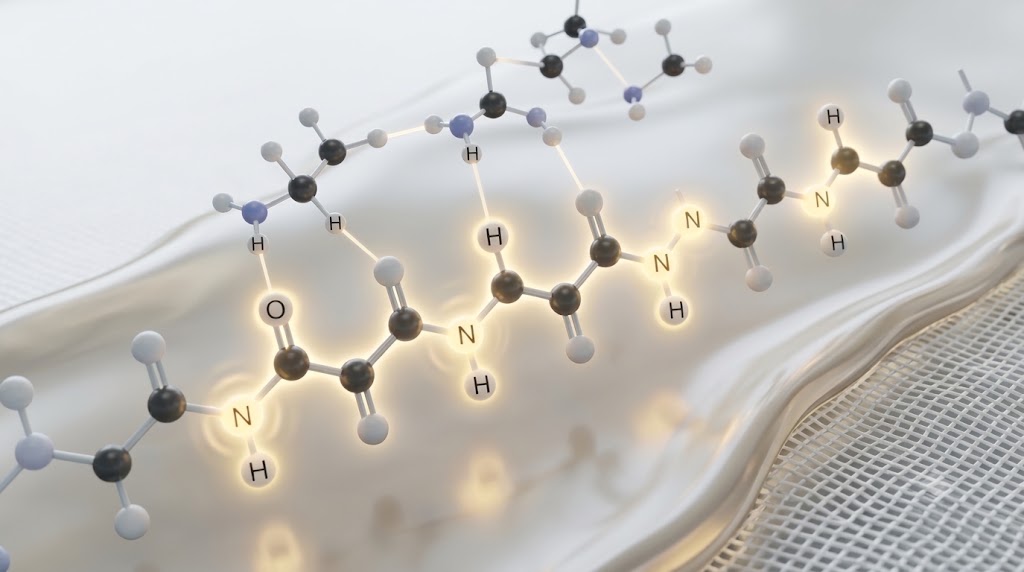
Of the five hot-melt film chemistries currently in commercial use-PA, EVA, TPU, PES (copolyester), and PO (polyolefin)-PA offers the most attractive balance of flexibility, temperature resistance, and chemical resistance. A polyamide adhesive, PA’s distinctive amide group chemistry (-NH-CO-) enables strong adherence to polar materials and a superior resistance to oils, solvents, and washing chemicals compared to the prevalent low-cost EVA chemistry. This makes PA particularly well-suited for interlining, no-sew underwear, and leather laminations, applications in which the bond must withstand multiple washing and dry-cleaning cycles, rather than just initially hold.
[MFG-03] FACILITY CAPABILITIES
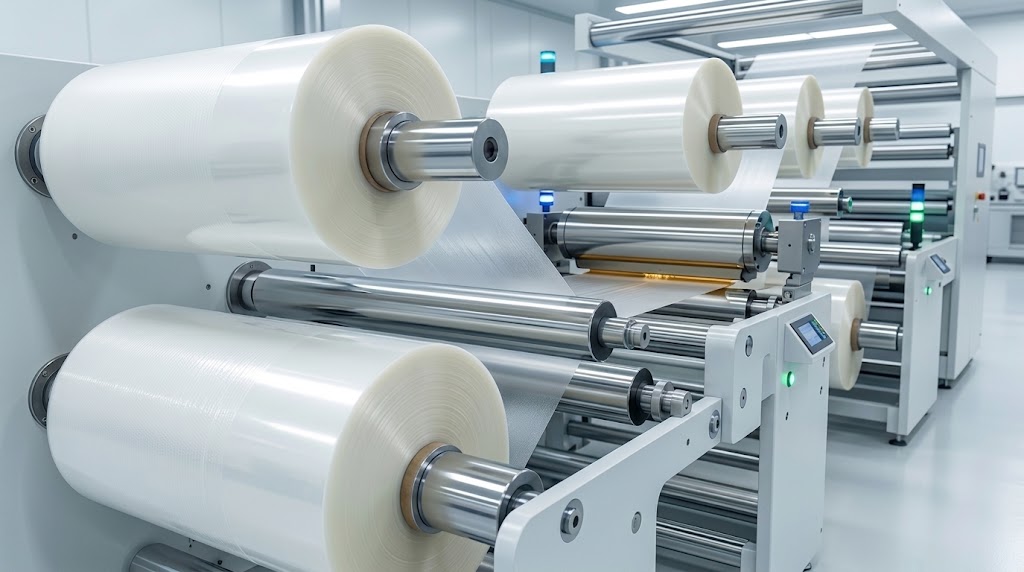
Teng Yang’s production of TPU hot melt adhesive film, EVA, PA, PES, and PO film, web, powder, and granule chemistries at a single facility in Shanghai simplifies sourcing when you need different chemistries for different product lines. If your supplier offers only EVA or TPU, the following section compares those to PA to identify situations in which PA’s higher cost is justified and where cheaper chemistries may be a better fit.
[CTRL-04] FORMULATION TUNING
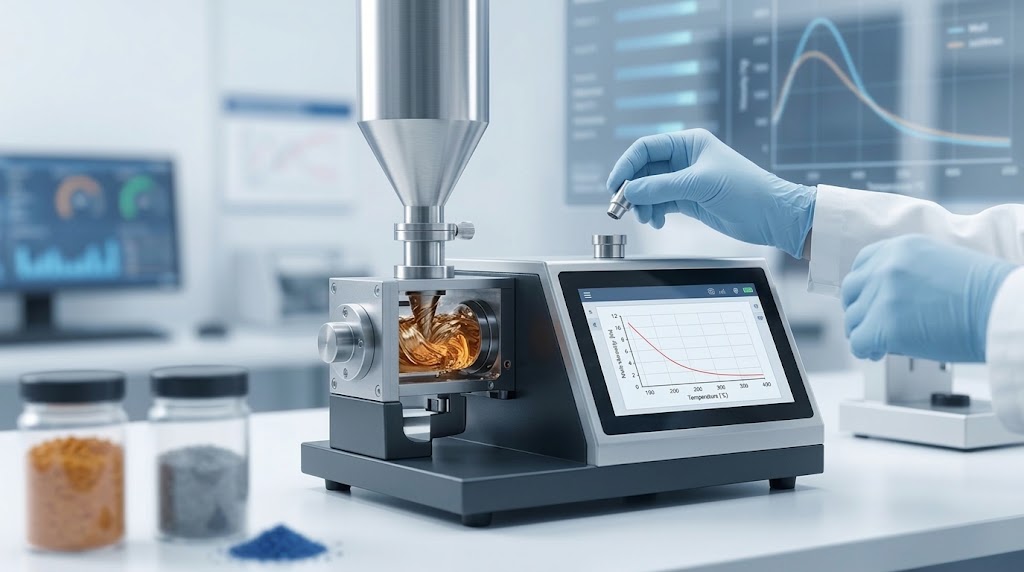
Because press cycles differ-e.g., a heat-transfer press with a 3-second dwell time will require a different melting point than an automotive laminator with a longer dwell time-Teng Yang customizes each PA formulation to your press rather than providing a single grade for all orders. While published PA formulation literature reveals melting points in the 100–125°C range (based on diamine/lactam ratios), the same tuning discipline Teng Yang uses to achieve these ranges also ensures that a correctly matched formulation will lose less than 10% of its dry-cleaning peel strength, unlike a mismatched formulation.
[DAT-MATRIX] SPECIFICATION INDEX
| Application | Recommended Format | Release Paper | Priority Property |
|---|---|---|---|
| Garment accessories / trims | Film or Web | With (hand-place) | Wash + dry-clean durability |
| No-sew underwear | Web | Without (roll-to-roll) | Flexibility, low bulk |
| Footwear lamination | Film | Without | Peel strength, flex fatigue resistance |
| Leather lamination | Film | Without | Oil / solvent resistance |
| Heat transfer printing | Film | With | Melting point match to print substrate |
| Reflective materials | Film | With | Chemical resistance, clarity |
| Automotive interiors | Film or Web | Without | Heat resistance, VOC compliance |
| Packaging | Web | Without | Fast set, cost efficiency |
| Building decoration | Film | Without | Long-term bond stability |
[SPEC] FORMAT DIMENSIONS
The formats provided here correspond to standard industry usage for each application category, not a finite catalog of SKUs. Teng Yang manufactures to your requested dimensions of width, thickness, melting point, and color, not according to our defined list of standard part numbers.
[PROCESS] DOWNSTREAM APPLICATION
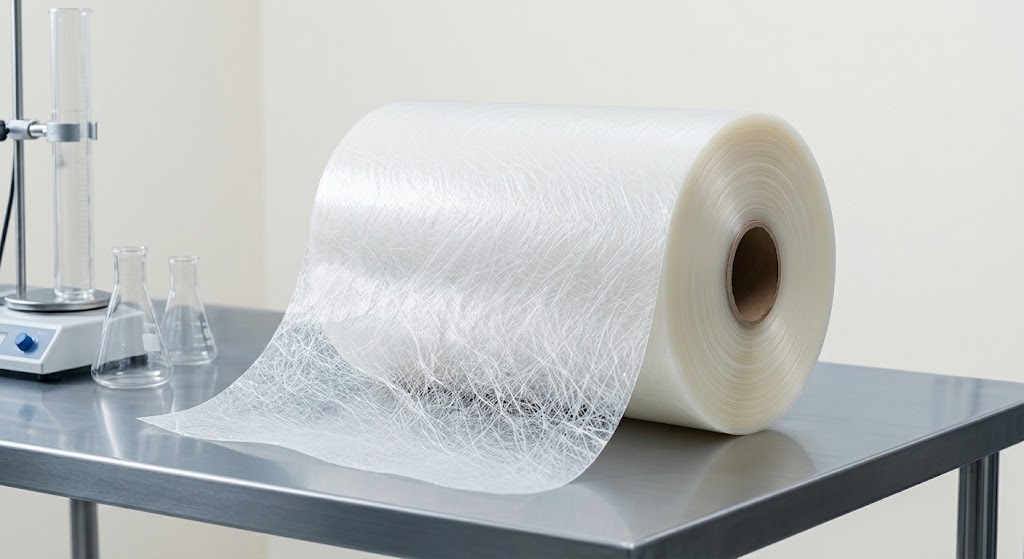
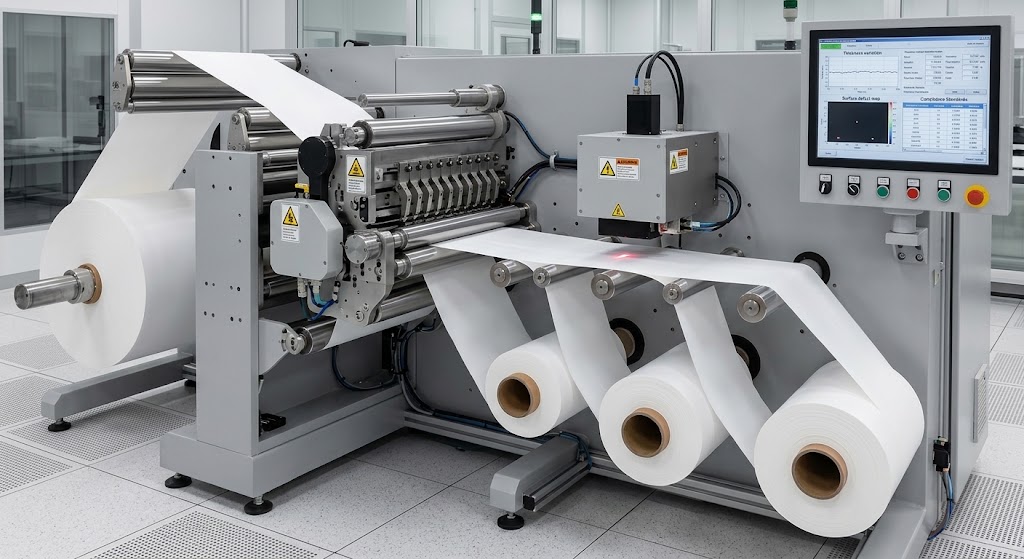
Both film and web originate from the same polyamide adhesive resin – it’s the downstream processing that’s different. Film is simply extruded as a long, continuous web that’s slit to width. Web, by contrast, uses spraying or coating of the liquid pa adhesive onto a moving belt in a controlled manner. This controlled application process creates the porous, textile-like form factor that lets the bonded layer keep breathability after pressing. Areal density (grams per square meter, gsm) is the measure you’ll want to track, it tells you how much adhesive is in the bond line, and you need enough to prevent coverage gaps without so much that the bond line stiffens a thin fabric noticeably. Teng Yang engineers areal density to your specific substrate weight, because a generic ISO-style thickness code doesn’t tell you whether coverage will be adequate on a heavier fabric, grams per square meter does. That’s a trade-off buyers on a fixed catalog SKU don’t get to make; unlike a supplier with three standard weights, Teng Yang isn’t defaulting you to the nearest one.
What “Melting Point” Actually Tells You
Commonly available commercial PA hot-melt blends for apparel are usually in the 100–125°C melting point range, and individual blends are customized to fall within this window through adjustment of the diamine/dicarboxylic-acid ratio and lactam content in polycondensation, as demonstrated in Chinese patent CN100439467C, which offers four PA clothing-adhesive compositions having melting points of 100–105°C, 106–111°C, 108–115°C and 112–119°C, and evaluated according to national standard GB/T 4608-84.[1] Within that range, lower melting point offers faster cycle time and reduced risk of scorch for heat-sensitive materials; higher melting point may offer better resistance to heat in use, e.g. summer use in car seat. Melt flow rate (MFI) – an ASTM D1238 metric – is used to characterize process uniformity and should always be stated with test conditions (e.g. “g/10min at 235°C/2.16kg” for polyamide-class material[2]) since ASTM D1238 expressly states that MFI is not to be considered as a measure of bond strength.
// SYS.LOG_ENTRY: Teng Yang Engineering Team
“Buyers ask us for ‘the strongest melting point’ as if there’s one right answer, there isn’t. A 100°C formulation that presses in three seconds on a heat-transfer line is the correct choice for one customer, and a 120°C formulation that survives an automotive interior in a hot climate is correct for another. We ask about your substrate and your press cycle before we recommend a range, not the other way around.”
[STATUS: OPTIMAL]
REC_001
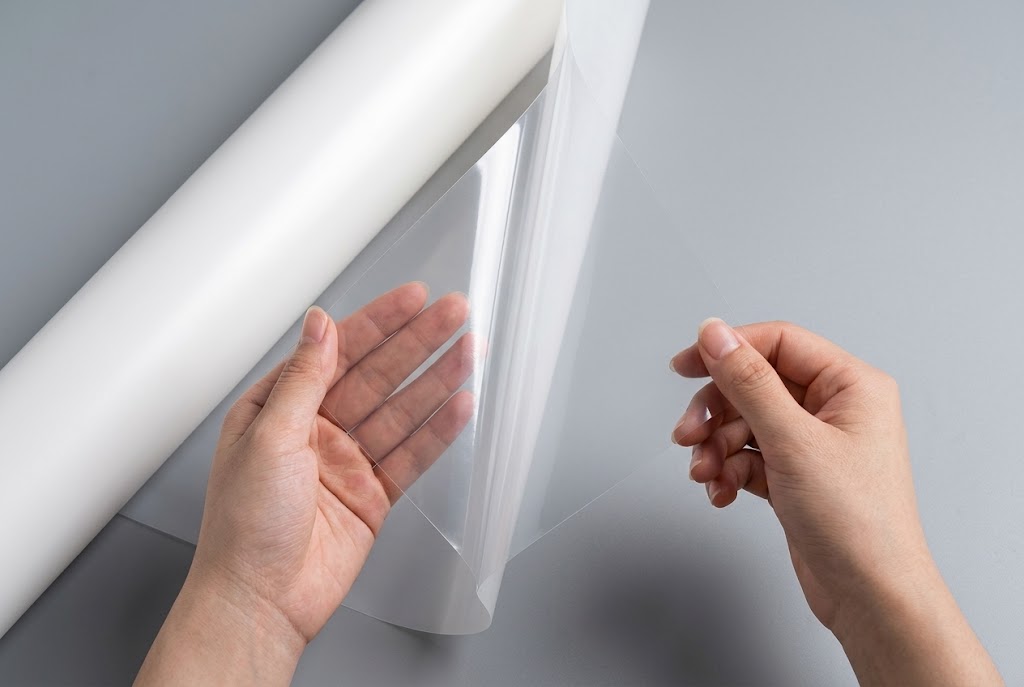
PA vs EVA vs TPU vs PES vs PO Hot Melt Film, Which Chemistry Fits Your Application
No single published study tests all five hot-melt chemistries side-by-side under identical conditions. Instead, the comparison below draws from independent peer-reviewed studies and patent literature, each using its own substrate and test method, so treat the numbers as chemistry-positioning benchmarks, not a single lab’s head-to-head test. Sources are footnoted per row.
Relative Flexibility
High — among the more elastic hot-melt chemistries[3]
Temperature Resistance
Higher of the group; formulations to ~125°C melting point[1]
Chemical / Oil Resistance
Strong — amide groups bond well to polar/oily substrates
Typical Cost Tier
Premium
Relative Flexibility
High, flexible at low cost
Temperature Resistance
Lower — narrower service window
Chemical / Oil Resistance
Moderate
Typical Cost Tier
Economy
Relative Flexibility
Very high — elastic, stretch-fabric friendly; polycarbonate-type softening point ≈80°C[4]
Temperature Resistance
Moderate–high depending on polyol type
Chemical / Oil Resistance
Good — hydrolysis-resistant grades available
Typical Cost Tier
Premium
Relative Flexibility
Lower — more rigid, less stretch[5]
Temperature Resistance
High — good wash/dry-clean durability
Chemical / Oil Resistance
Good
Typical Cost Tier
Mid–Premium
Relative Flexibility
Lowest — the stiffest of the group, well suited to rigid bonding[3]
Temperature Resistance
Moderate
Chemical / Oil Resistance
Excellent on low-surface-energy plastics (PP/PE)
Typical Cost Tier
Economy
This table compares general chemistry-class characteristics, not the guaranteed performance of a single Teng Yang product line, and the underlying sources use different test types (bonded-joint lap-shear versus bulk-material tensile testing) rather than one uniform method, treat cited figures as directional, not cross-comparable lab-for-lab. Contact Teng Yang for application-specific test data on your exact substrate combination.
Comparing chemistries for a specific fabric or substrate?
Request Application Support →
HOT MELT
Where PA Hot Melt Film Delivers Results, Applications Across Garment, Footwear & Automotive
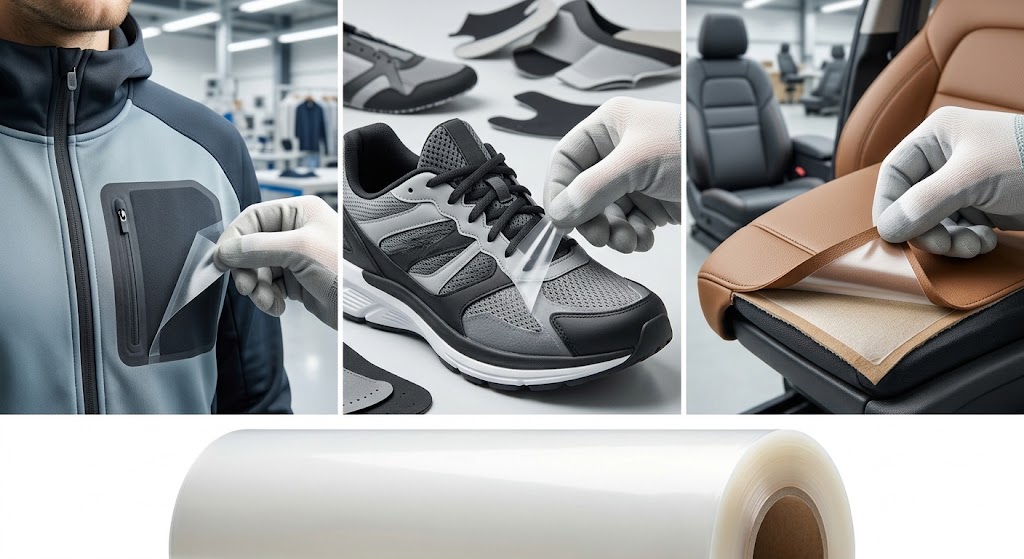
Teng Yang’s pa hot melt film and web span nine application categories: garment accessories, no-sew underwear, footwear lamination, leather lamination, heat transfer printing, reflective materials, automotive interiors, packaging, and building decoration. (The common thread through all nine is a bond that need to survive something after the initial press – a wash cycle, a dry-clean cycle, a season of flexing at a shoe joint, or years of interior heat cycling in a vehicle).
[APP-01] Garment & No-Sew Apparel
With no-sew apparel and accessory hot-melted seams, PA web completely eliminates the sewn stitch – the bonded seam is lower profile on skin than a sewn stitch and won’t cause irritation from threads, which is a common cause for returns of sewn garments.
[APP-02] Footwear & Leather Lamination
When the bonding go on footwear or is used to laminate leather, demands on the bond increase. An upper-to-midsole seam flexes thousands of times in the lifespan of the shoe, and a high retained peel strength after many cycles is just as important as initial bond strength, and the polar nature of PA’s amide group give it a decided adhesion advantage on leather’s natural oils when compared to EVA.
[APP-03] Heat Transfer & Reflective
Heat-transfer printing and reflective material hot-melts require tight melting-point control; the point must be high enough to achieve good initial adhesion without prematurely activating the film, but low enough that the film doesn’t scorch the printing layer or reflective coating upon application. Therefore, melting-point range – not just whether or not a given formulation is classified as hot melt film – is the most critical starting specification to establish.
[APP-04] Automotive Interiors
The bonding of automotive interior components (often based on detailed specifications such as polyamide hot melt adhesive film automotive) involves not only mechanical requirements but also high temperatures through multiple heat cycles, this is a large enough application category that a specific U.S. customs classification ruling exists for polyamide hot-melt adhesive bonding wood, metal, and plastics used in automotive interior trim. An interior door-panel or dashboard laminate is subjected to repeated cycles of heat through repeated exposure to hot cabins over a vehicle’s lifetime, so PA’s excellent high-temperature performance as a garment material is just as important for this application.
[APP-05] Metal Bonding (Exception)
When bonding directly onto bare metal, however, hot melt adhesive film for metal applications generally employs EVA or polyolefin chemistry, because PA’s inherent strengths, including polar-material adhesion, don’t apply to metal-to-metal bonding the way they do to fabric and leather. Getting this chemistry match wrong is the mistake Teng Yang resolves at the quoting stage, not after a production run: a formulation picked for the wrong substrate risks bond failure that shows up only after the part is in the field, which is a costlier problem than a slightly longer spec conversation up front.
Fewer Rework Cycles
Manufacturers moving from solvent-based bonding or hand-sewn construction to hot-melt film generally report faster cycle times, since the process eliminates open-time solvent evaporation and drying steps entirely — exact time and cost savings depend heavily on your current process and volume.
Directional finding based on general hot-melt-vs-solvent-adhesive process comparisons (industry technical literature); no single quantified ROI/TCO figure was found in published research specific to this switch, so treat this as a qualitative trend, not a guaranteed percentage. Ask Teng Yang for a process assessment covering figures specific to your line.
DURABILITY & FORMULATION NOTES
Whether a PA film is garment-grade or a general-purpose adhesive will be indicated by wash and dry-cleaning resistance performance. Chinese textile standard FZ/T 01085-2000 describes tests for peel strength, water, and dry-cleaning resistance of clothing hot-melt adhesives, and according to published formulation data for one test, such a garment-grade hot-melt adhesive will only lose 10% peel strength after being dry-cleaned with tetrachloroethylene (while it would lose 14-20% after an alkaline wash at 60°C).[1] Keep this difference in mind if a garment that may be dry-cleaned is also prone to alkaline washing.
The honest version of the moisture question is that polyamide chemistry can be engineered to go the opposite direction for specialty applications. Researchers have shown how to design a PA6/lithium-bromide smart adhesive that maintains 1.0 MPa of lap shear strength when dry, and loses nearly all of its bonding strength, dropping to 0.1 MPa, when moisture is applied.[6] That’s a design specific to a masking-film application, not a flaw in textile-grade PA film, but it’s exactly why Teng Yang won’t let a buyer assume wash/moisture resistance from the base chemistry alone without confirming the formulation is optimized for your intended exposure.
Need dry-clean or wash-durability data for your application?
Request Data →
Manufacturing Quality & Standards

FLIP ⤹
The actual compliance regimes which drive textile-adjacent adhesive material when shipped overseas are RoHS and REACH-restricted-substance and chemical-registration standards that a garment-accessory purchaser in the EU or US should care about more than a generalized quality management certificate. Teng Yang formulate PA, EVA, TPU, PES, and PO hot melt products to meet restricted-substance standards relevant to the RoHS/REACH regulations of our export markets; customers who require a specific compliance document (RoHS declaration of conformity, REACH SVHC statement, customer-specific restricted substances list) should communicate the exact documentation requirement to Teng Yang at the time of order to ensure it is covered by the applicable formulation and destination.
FLIP ⤹
The real key to the hot melt production process is controlling the two most common sources of failure, not in the material, but on the process side of production. Bond failure traced to substrate incompatibility or a contaminated bonding surface, which is not an adhesive material defect, is by far the most commonly reported root cause of a production batch failing in the field. The second most common cause is excess moisture during melt processing, which leads to adhesive foaming or bubbling.[7] Teng Yang resolves both at incoming inspection: a contaminated raw-material lot is what actually drives the inconsistent peel strength a buyer might wrongly blame on “bad batches of film” — the trade-off we won’t make is skipping that inspection step to compromise on turnaround time. That discipline is part of what keeps peel-strength loss under 10% in a correctly processed batch (see Applications, above) — the documented PA formulation process itself is nitrogen-protected and temperature/pressure-controlled at every reaction stage, since a supplier’s raw-material and process consistency matters as much as the headline spec sheet.
OEM Custom Formulation
- // CORE PARAMETERS Thickness / Width / Melting Point / Color
- RoHS / REACH Oriented Confirm documentation per order
- 5-Chemistry Production TPU / EVA / PA / PES / PO under one factory
Need a formal compliance declaration for your import market?
Request Documentation →
PROCUREMENT // GUIDELINES
Buying Guide, MOQ, Customization, Lead Time & Free Samples
Many first-time Chinese hot melt film buyers stumble on the same two issues, which will typically delay a first-order by 7+ days combined: first, the minimum order quantities catch a buyer unaware during negotiations; second, the sample they approved doesn’t match the bulk production batch. To avoid both of these delays, Teng Yang asks for the full spec-chemistry, format, thickness, width, target melting point for your heat-press, and your intended application exposure (e.g., wash cycles, dry cleaning)-before quoting and before entering the bulk production cycle. Building a quote (or running production) on partial information is what creates that follow-up request, not an unwillingness to price for accuracy. We’ll never suggest that you sacrifice the precision of your formulation to achieve faster turnaround.
PRICING // VARIABLES
What Drives Your Quote
Your Price: 40% More Expensive if Buying the Wrong Kit? hot melt adhesive film pricing will rise if it’s a high chemistry (PA and TPU vs EVA and PO), thicker, with more material per area, if buying low quantities, and will be at a higher rate for special formulation (melting) work such as unique melting points or color match. Minimum quantity and turnaround are affected by if you match a current run or if you’ve new melting formulation-it’s more efficient to supply your total specs than to ask for your best price, which can delay and/or miss the correct estimate on the first attempt.
READY TO MOVE FORWARD?
REQUEST CUSTOM QUOTE →
Engineering Resources & Planning Tools
FAQ
Q-01
What is PA (polyamide) hot melt adhesive film made of?
PA hot melt adhesive film is a thermoplastic film made primarily from polyamide resin — the same amide-group (-NH-CO-) chemistry family as nylon — extruded into a thin film or coated onto a non-woven web. It’s solid and non-tacky at room temperature and forms a bond when heated to its melting point (typically 100–125°C for clothing-grade formulations) and pressed against the substrate.
Q-02
How does PA hot melt adhesive film compare to EVA, TPU, and copolyester (PES) hot melt film?
PA generally offers stronger chemical and oil resistance than EVA at a higher cost, higher elongation/flexibility than PO (polyolefin), and competes with TPU for stretch-fabric applications, though TPU tends to lead on pure elasticity. PES (copolyester) trades some flexibility for wash/dry-clean durability. The right choice depends on your substrate, required flexibility, and expected exposure (washing, dry-cleaning, heat) — see the comparison table above. The mistake to avoid is picking on price alone: a cheaper EVA formulation that fails after repeated washing costs more in returns than the price difference ever saved, when a correctly matched PA formulation keeps peel-strength loss under 10% after dry-cleaning.
Q-03
Is PA hot melt adhesive film washable and dry-clean safe?
Formulations tested against Chinese textile standard FZ/T 01085-2000 show peel-strength loss under 10% after dry-cleaning and in the 14–20% range after a 60°C alkaline wash cycle — meaning wash and dry-clean durability depend on the specific formulation, not the PA chemistry class as a whole. Confirm test data for your specific wash/dry-clean regime before specifying for a garment that will see repeated cleaning.
Q-04
What’s the difference between PA hot melt film and PA hot melt web?
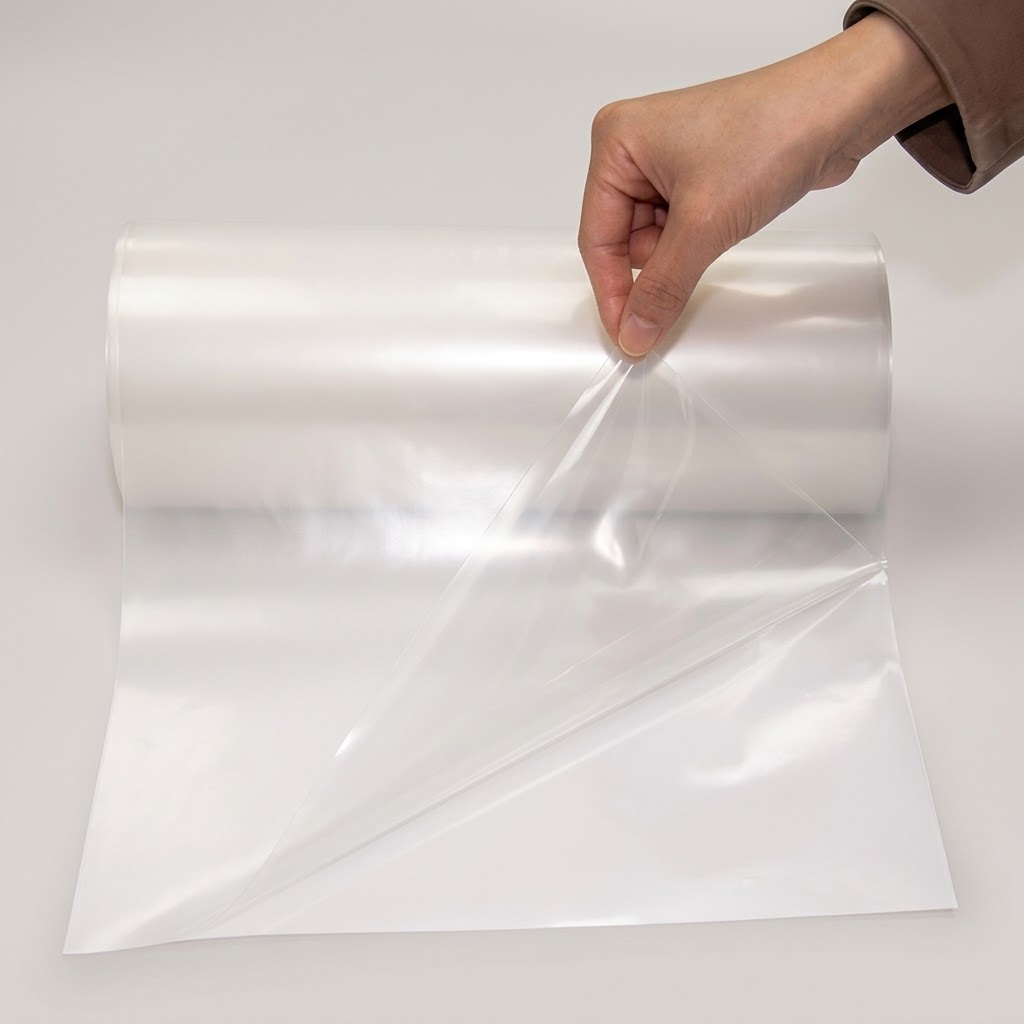
Film is a continuous, non-porous sheet. Web is a non-woven fibrous mesh form that handles like fabric, stays more breathable, and is the more common choice for garment and no-sew underwear applications where flexibility and airflow matter more than a fully sealed bond line.
Q-05
Do you sell PA hot melt film with or without release paper?
Both. Release-paper-backed film suits hand-application and small-batch garment work where you peel and place before pressing. Liner-free (without release paper) suits roll-to-roll industrial lamination lines. Teng Yang produces both formats to your specified thickness and width.
Q-06
What HS code applies to hot melt adhesive film for customs clearance?
Hot melt adhesive in bulk/preparation form is classified under HS 3506.91 internationally. If your shipment is a film or web laminated onto a nonwoven substrate, it may instead fall under HS 5603 or HS 3919 depending on the product’s essential character. Confirm the exact code for your product form and destination market with your customs broker — the cheapest-looking code is not always the correct one, and using it can create customs delays, since this varies by country and by exactly how the product is presented for shipment.
Q-07
Can Teng Yang customize melting point, thickness, width, or color?
Yes — Teng Yang formulates PA (and EVA, TPU, PES, PO) hot melt film and web to your specified thickness, width, melting point range, and color, rather than offering only fixed catalog sizes. Share your substrate, press parameters, and target exposure conditions for an application-matched recommendation.
Q-08
What applications is PA hot melt adhesive film used for?
Garment accessories, no-sew underwear, footwear lamination, leather lamination, heat transfer printing, reflective materials, automotive interiors, packaging, and building decoration are Teng Yang’s nine core application categories for PA hot melt film and web.