Get in Touch with Teng Yang Company


DTF Powder (Wholesale) DTF
DTF Powder (Wholesale) — TPU Hot-Melt Adhesive Powder Manufacturer
Manufacturer-direct DTF powder for print shops and resellers that have outgrown 1–2 kg retail bags. Tengyang supplies spec-controlled TPU hot-melt adhesive powder in white, black and low-melt grades — sold by the 20–25 kg bag, batch-tested, particle-labeled, and available for OEM formulation and private-label packaging.

SYS.READY

SYS.READY
TPU
100% thermoplastic polyurethane base
0–250µm
Fine / Medium / Coarse grades
50–100+
home-wash cycles, 40–60°C
White / Black
Low-Melt grade options
20–25 kg
bulk bag, palletized export
100%
per-batch tested, lot-labeled
Inconsistent DTF Powder Is Costing Print Shops More Than It Saves
DTF powder — also sold as DTF transfer powder — is the TPU (thermoplastic polyurethane) hot-melt adhesive that bonds a Direct-to-Film print to fabric. After a DTF printer lays DTF ink onto a coated PET transfer film (the DTF film), the powder is sprinkled onto the wet ink, melted in a curing oven, then heat-pressed onto the garment. Unlike DTG (direct-to-garment) printing, which jets ink straight onto the fabric, DTF transfers are built on the film first and pressed on second — and the powder is the layer that makes that bond hold. DTF is an actively patented transfer process (US patent WO2024185795A1, 2024). It is also the smallest line item on a DTF print (roughly 3–5% of a $1.10–$4.45 cost-per-print), and the one most likely to sink an order.
01. ISSUE
The Reality in the Returns Queue
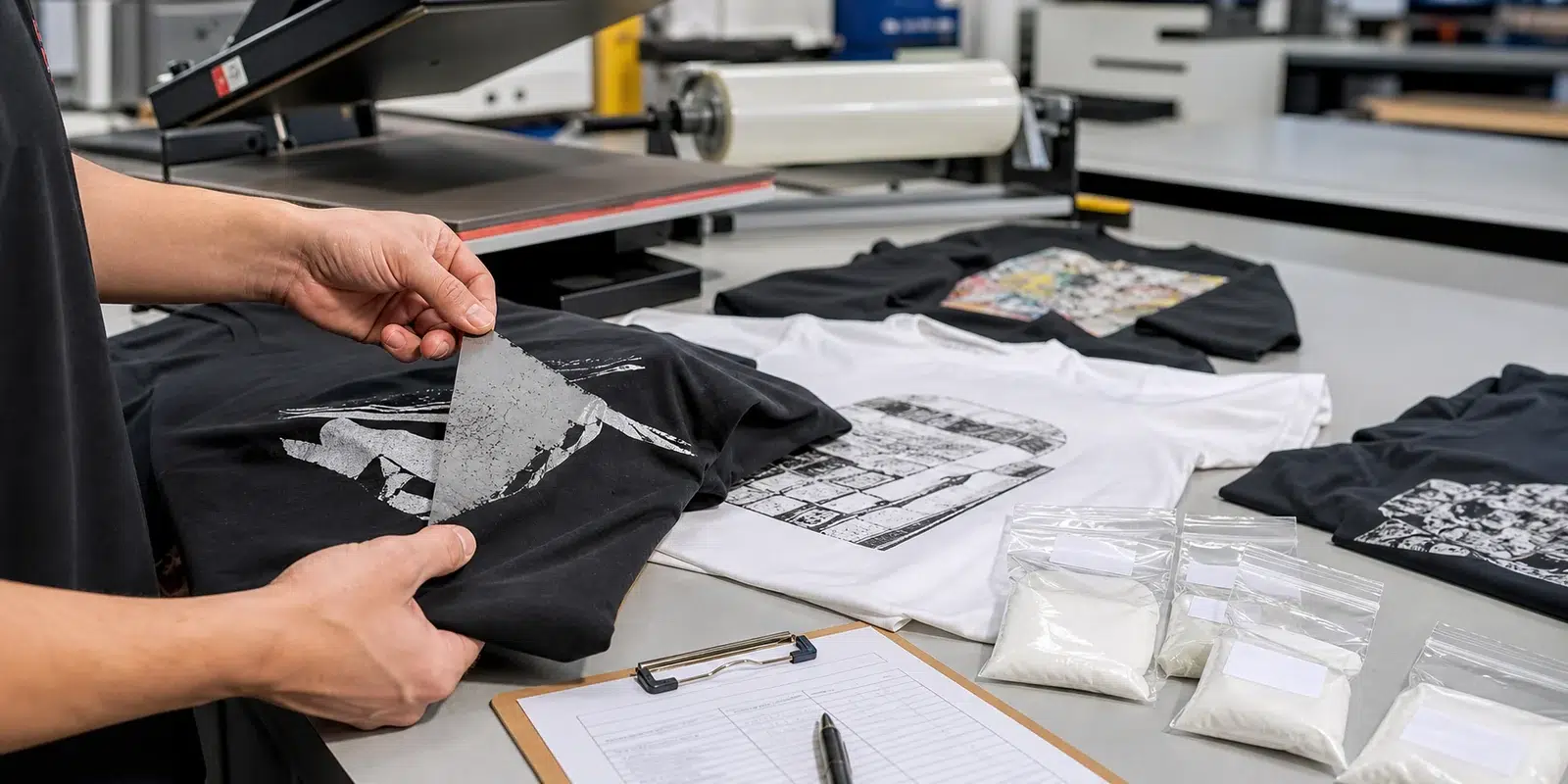
Failures that shows up in your returns queue is rarely dramatic. One transfer looks perfect off the press, then peels after three washes because the adhesive never fully bonded. A batch that ran clean last month clumps in the shaker this month. Two orders of the “same” powder land with different hand-feel, and the second one cracks when the garment folds. Print-shop operators on r/heatpress describe the pattern bluntly — supplier quality that is “hit and miss,” and Amazon-sourced powder that is “a gamble” for wash resistance.
02. CAUSE
Repackagers vs. Direct Polymer Control
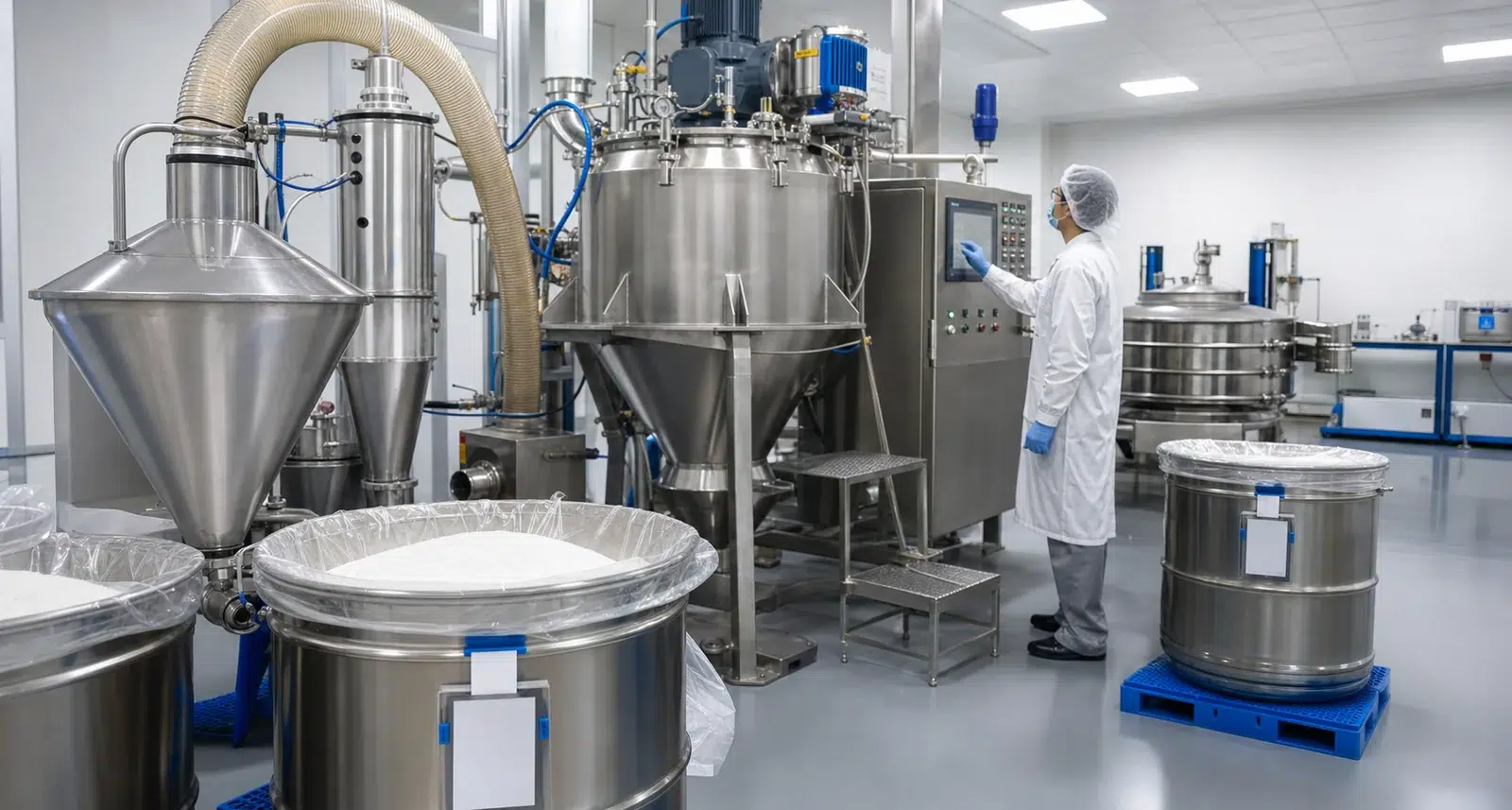
Here is the root cause behind most of it: retail DTF powder moves through repackagers who do not control the melt-flow window, the particle distribution, or the batch record. Buyers rank melt behavior and batch consistency above brand name for exactly this reason — when wash-fastness and color hold matter, the label on the bag predicts less than the lot behind it. Tengyang answers that with the opposite model: we run the polymer, so every 20–25 kg lot carries a tested melt point, a labeled particle grade, and a batch number you can trace — the grade transparency that a retail bag marked only “DTF powder, white” cannot give you.
Wholesale Compliance & Standard Specifications
Below, you get the full spec sheet, the grade-to-fabric map our production team uses, an honest polymer comparison, and the wholesale terms — MOQ, packaging, OEM formulation and compliance documentation — a serious buyer needs before committing a bulk order.
Tengyang DTF Powder Grades — White, Black, Low-Melt & Particle Size
Low melt does not mean low quality — one of the most expensive assumptions in a DTF shop. Powder engineered to activate at a lower temperature is not a weaker adhesive; it is formulated to reach full bond at a temperature that will not scorch heat-sensitive polyester, tri-blends or athletic fabric.
Picking the grade to the garment, not to a single “universal” bag, is what separates a shop that reprints 8% of orders from one that reprints under 1%.
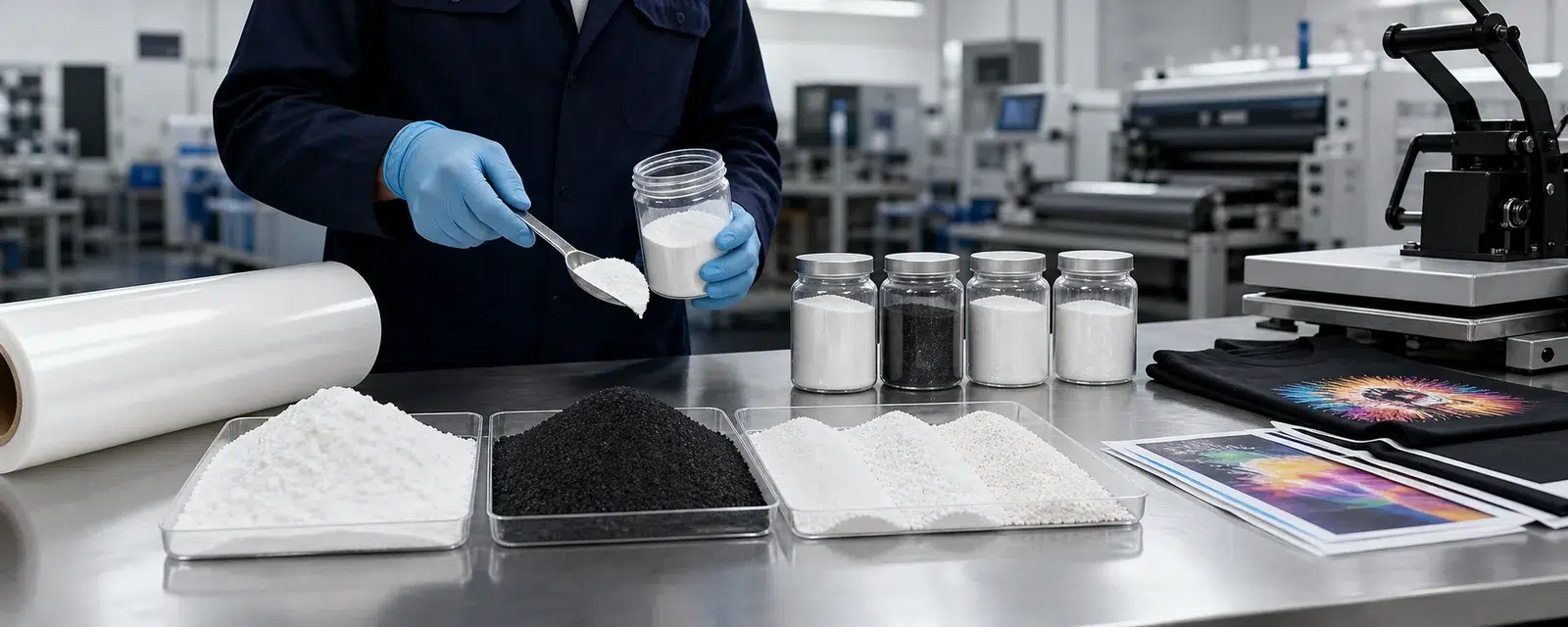
Tengyang DTF powder is offered along three axes — color, particle size, and melt profile — each mapped to a real production scenario.
Color: white, black and the dye-migration question
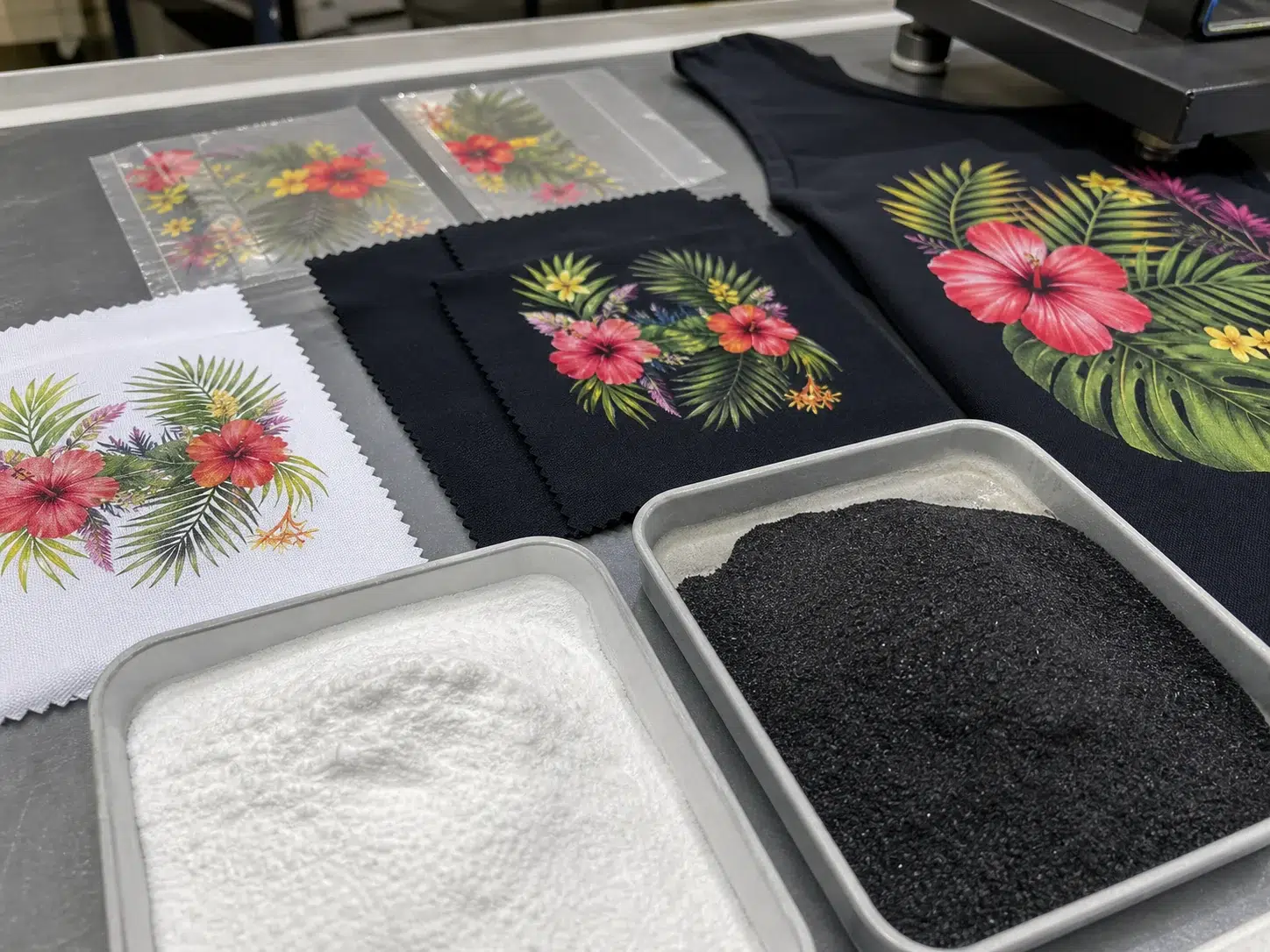
White powder is the standard base for light and dark garments; its white under-layer helps colored ink stay vivid. Black powder is built for dark fabrics, where stray white adhesive would read as a halo around the design — and it carries dye-migration blockers for polyester.
One honest caveat we tell buyers directly: black powder is not an automatic migration cure. On heavily-dyed polyester pressed near 150°C, color blockers reduce — but do not always eliminate — the dye bleed that turns white graphics pink. For sublimation-prone poly and sportswear, an anti-sublimation grade plus a lower press temperature does more than powder color alone.
Particle size: the hand-feel and detail lever PATENT
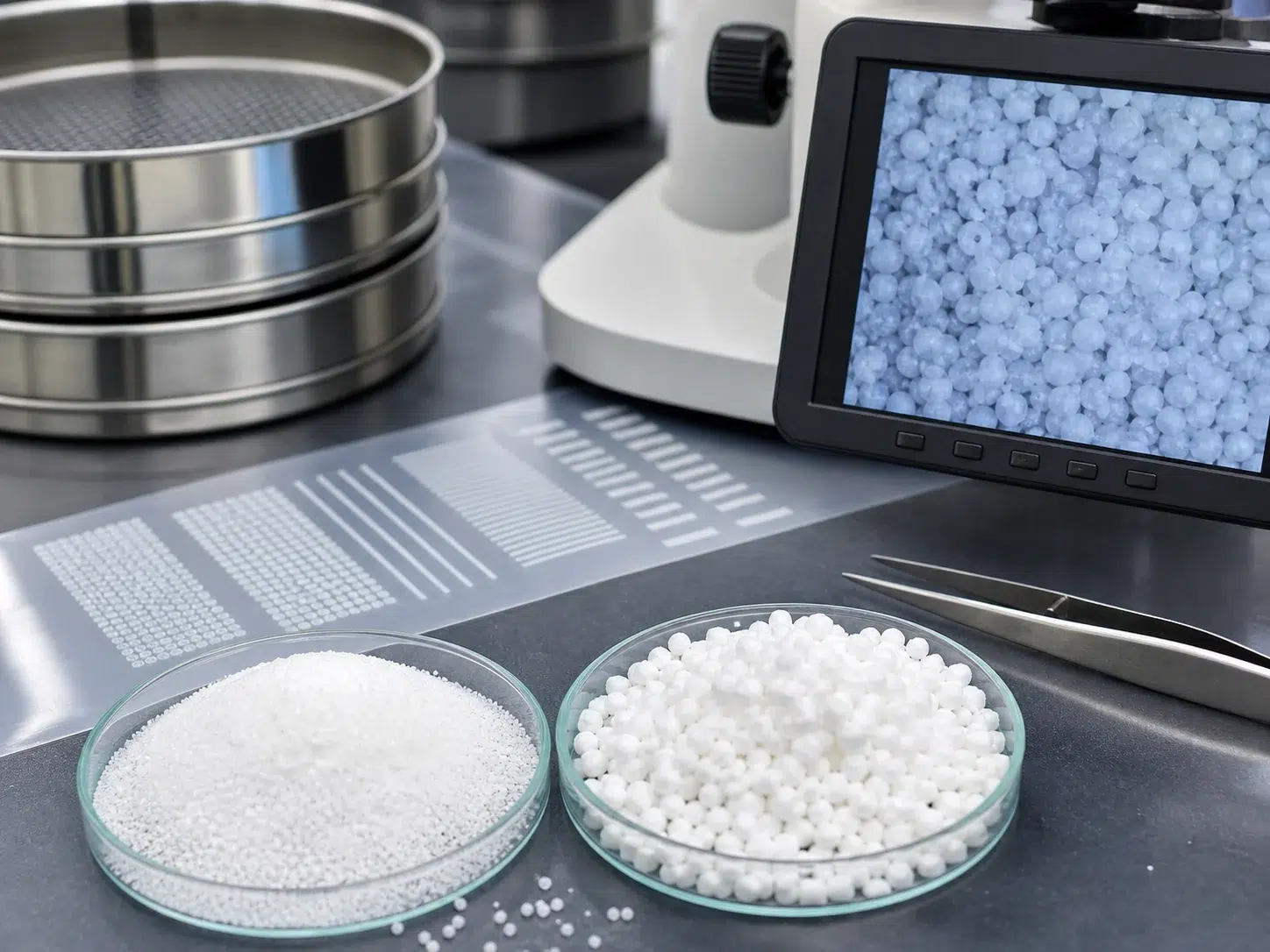
Particle grade governs both the printed detail and the softness of the finished transfer. Finer powder settles into small text and thin lines and lays down a thinner, softer adhesive film; coarser powder builds a thicker bond for heavy, textured fabric.
Depositing a controlled adhesive-powder layer onto printed film is an engineered step documented in hot-melt patents such as US20230000204A1.
The Tengyang DTF Powder Spec Grid
Our production team maps each order to a grade with the reference grid below — the fabric-to-grade table no retail bag prints on its label. Use it to write a spec into your RFQ instead of guessing from a marketing name.
| Print scenario / fabric | Color | Particle grade | Melt profile | Peel | Typical press |
|---|---|---|---|---|---|
| Cotton tee — fine-detail logo/small text | White | Fine 0–80µm | Standard | Cold | 150°C / 15 s |
| Cotton hoodie — bold graphic | White | Medium 80–200µm | Standard | Hot | 150°C / 15 s |
| Canvas tote / heavy cotton bag | White | Coarse 150–250µm | Standard | Hot | 155°C / 18 s |
| Dark polyester jersey / teamwear | Black | Medium 80–200µm | Low-melt | Cold | 130°C / 12 s |
| Spandex / lycra activewear (high stretch) | White | Fine 0–80µm | Low-melt | Cold | 130°C / 12 s |
| Nylon bags / technical fabric | White | Medium 80–200µm | Low-melt | Cold | 120°C / 10 s |
| Tri-blend retail tee (soft hand priority) | White | Fine–Medium | Low-melt | Cold | 130°C / 12 s |
| Children’s wear (skin-contact / Class II) | White | Fine 0–80µm | Standard | Cold | 150°C / 15 s |
| Dark cotton — no-halo requirement | Black | Medium 80–200µm | Standard | Hot | 150°C / 15 s |
| High-volume roll-to-roll (shaker flow priority) | White / Black | Medium 80–200µm | Standard | Line-set | Per line |
DTF Powder Specifications Melt Point, Particle Size, Cure Window & Wash Durability
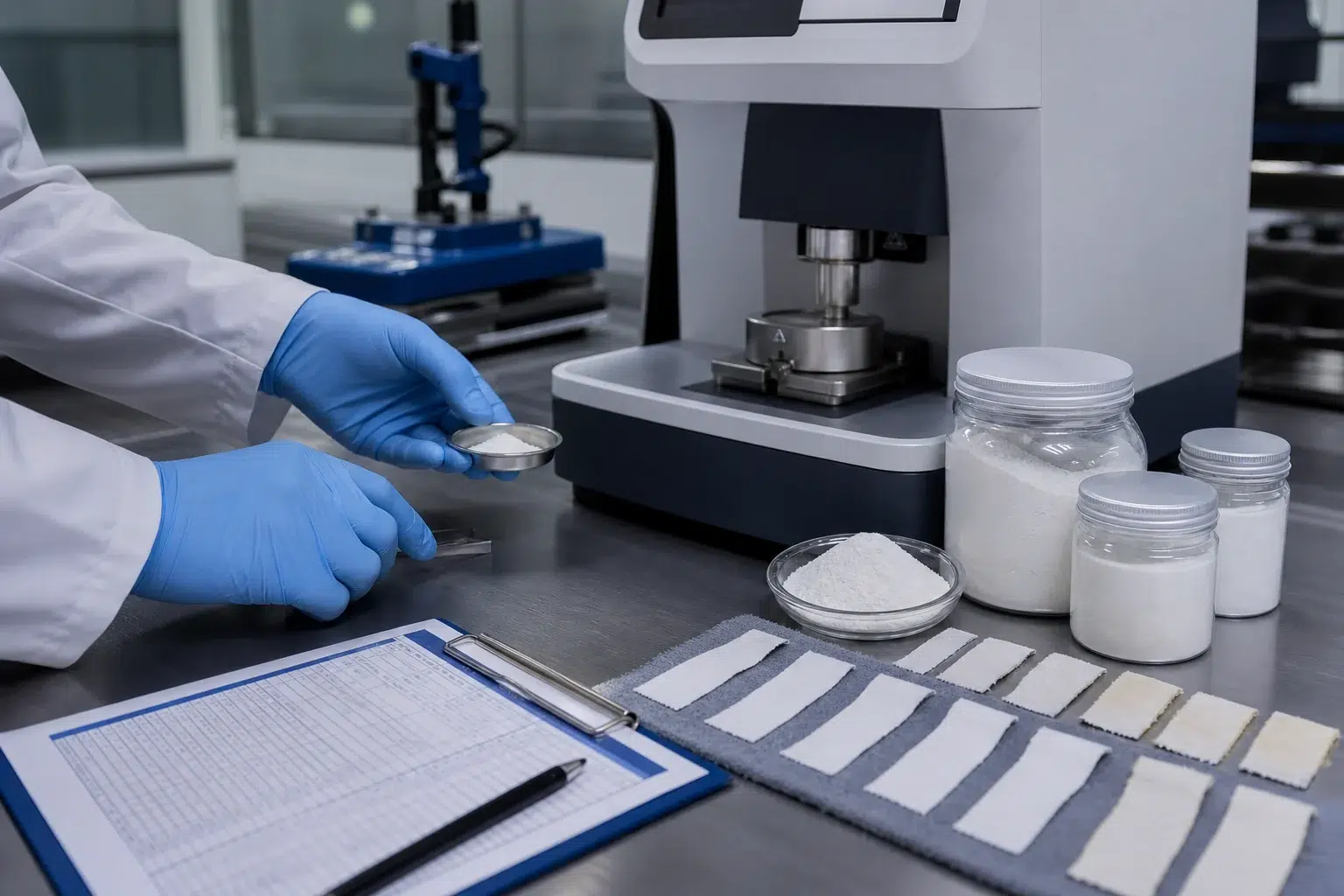
Grade-label confusion is the single most common complaint against retail powder — buyers report bags that never state the particle grade at all. This spec table below is the datasheet we ship against; every value is a representative range for TPU DTF powder corroborated across independent industry sources, with the exact figure for a given lot printed on that lot’s certificate.
| Parameter | Fine grade | Medium grade | Coarse grade |
|---|---|---|---|
| Particle size | 0–80µm | 80–200µm | 150–250µm |
| Base polymer | 100% TPU (thermoplastic polyurethane), no polyamide extender | ||
| Softening / melt onset | 95–115°C | ||
| Full activation / press temp | 120–135°C | 130–150°C | 140–155°C |
| Melt index | ~40 g / 10 min @ 160°C | ||
| Cure window (oven / hover) | 105–150°C (220–300°F), 2–3 min | ||
| Press time / pressure | 10–20 s / 0.5–1.5 kg·cm² | ||
| Wash durability (home 40–60°C) | 50–100+ cycles typical, no crack/peel | ||
| Peel | Hot-peel or cold-peel grades | ||
| Hand-feel | Softest | Balanced | Textured / firm |
| Shelf life | 12–18 months sealed / 6–9 months opened | ||
| Packaging | 20 kg & 25 kg moisture-barrier bag, palletized; OEM 1/5/20 kg | ||
Engineering note — softening onset vs press temp
Any spec sheet quoting “melt point 95–115°C” and a press guide quoting “130–150°C” are not in conflict: the first is the softening onset where the resin begins to flow, the second is the press temperature that drives full activation and film-to-fabric bond.
A standard-melt powder pushed to full activation on a heat-sensitive tri-blend is where scorch and lost stretch begin — which is why the grade grid pairs low-melt chemistry with those fabrics rather than turning the press hotter.
Wash Durability & Grade Transparency
Wash-durability figures here reflect typical home laundering at 40–60°C, not a single certified test number — a distinction worth holding your suppliers to. Defensible durability claim states the method: garments laundered per ISO 6330 (domestic washing procedure) or the Chinese equivalent GB/T 8629, with results evaluated separately. Any powder sold to you as simply “machine washable” with no method behind it is selling you a hope, not a spec.
We hold each grade to these ranges because a 40–60µm drift in particle distribution changes both shaker flow and the thickness of the melted adhesive film — the margin between a clean powder release and a clogged shaker mid-run. That is why every Tengyang lot is laser-sized and melt-point tested before it is packed, and why we can print the grade and batch number on the bag when a repackaged retail powder, three hands removed from the reactor, simply cannot. The spec transparency is the differentiator: you are buying a measured lot, not a marketing name.
DTF Powder Types for DTF Printing — TPU vs Polyamide, Polyester & EVA
The phrase “cheap DTF powder” usually hides a chemistry decision. Low-cost powder is often TPU cut with polyamide (PA) to lower the price — and the buyer feels the difference on the shirt, not on the invoice.
As one shop put it, adulterated powder “creates a thick, stiff layer… it feels like wearing a plastic bag, doesn’t breathe, and cracks when folded.” A good transfer, in the words of a streetwear producer, “should not feel like a vinyl sticker.” Each hot-melt polymer earns its place on the right fabric. The matrix below compares the four you will actually be quoted, in DTF terms.
The Tengyang Engineering Standard
Tengyang DTF powder is a 100% TPU base — the chemistry buyers screen for when stretch, soft hand and wash-fastness all have to hold. Where an application genuinely needs polyamide abrasion resistance or a polyester wash ceiling, we formulate to it as an OEM order rather than quietly blending PA into a “TPU” bag to hit a price. The industry has long combined these layers deliberately: US patent WO2015103098A1 (Avery Dennison) documents pairing a TPU hot-melt powder with a polyamide powder for fabric heat transfers — blending is a design choice, and it should be disclosed, not hidden in the grade name.
Wholesale & OEM DTF Powder
MOQ, Bulk Packaging & Private Label
Retail powder economics break down stops working the moment your shop runs volume. A 1–2 kg retail bag lands near $40–50/kg ; the same TPU powder bought as a 20–25 kg manufacturer lot runs roughly $4–8/kg.
Because powder is only 3–5% of your cost-per-print, buyers do not switch to wholesale to save on the powder line — they switch to remove a variable that was quietly failing orders, and pocket the price gap as a bonus.
~$4–8 / kg
manufacturer bulk (20–25 kg) vs. ~$40–50/kg at 1–2 kg retail
— on a consumable you reorder every month
Industry pricing range, 2024–2026 (Alibaba bulk / Ninja Transfers retail). Your landed cost depends on grade, volume and freight — request a quote.
Wholesale is also where consistency becomes contractual rather than hopeful. Our wholesale and OEM terms are built around what bulk buyers told us they screen for:
MOQ and packaging
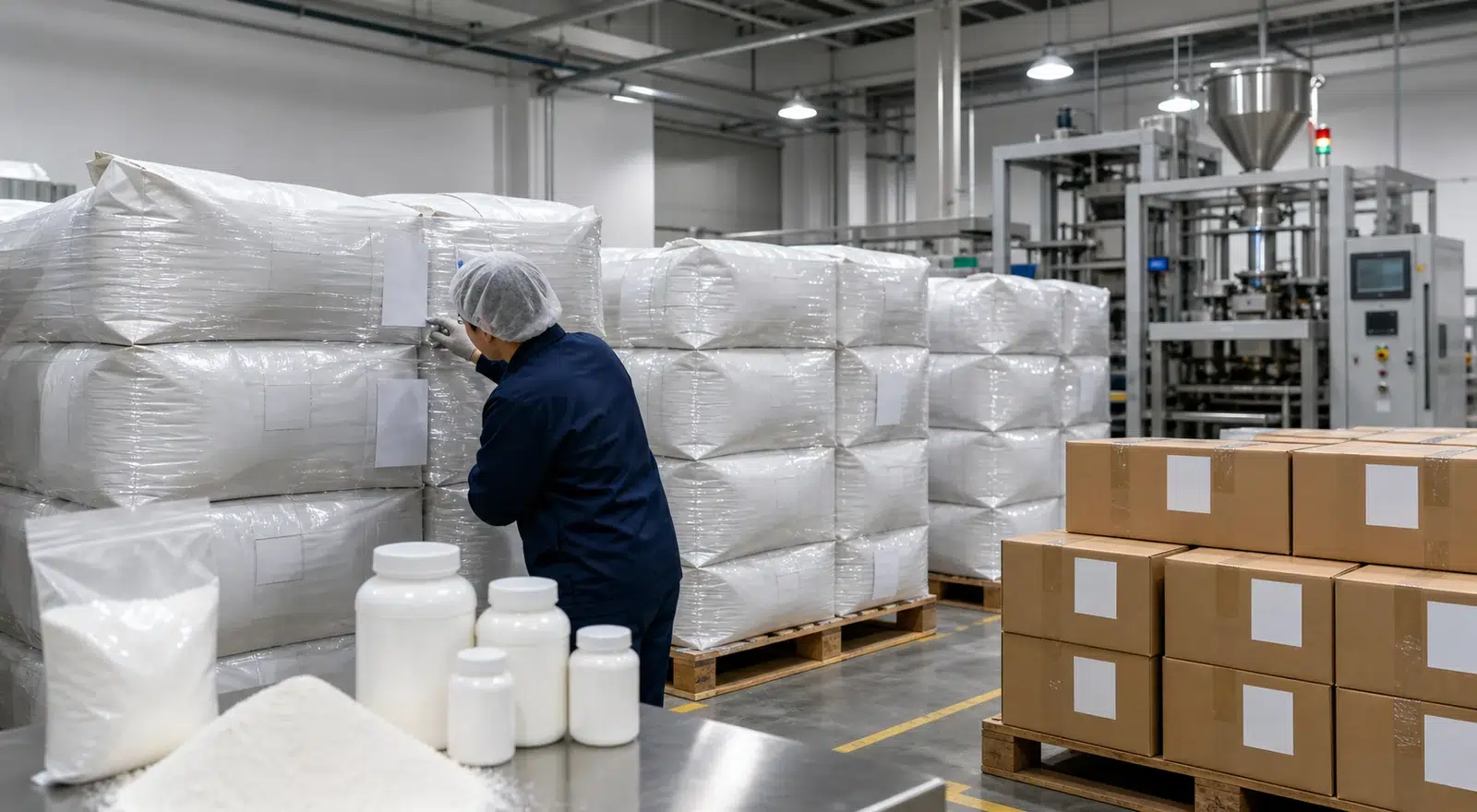
stock grades ship by the 20 kg or 25 kg moisture-barrier bag, palletized for sea or air. OEM / private-label formulation from a 500 kg run, in custom 1/5/20 kg packs under your label.
Custom formulation
melt point, particle grade, color and peel tuned to your press and film — a real OEM order, not a relabeled stock bag.
Batch traceability
every lot carries a batch number, particle grade and tested melt point, so the sample you approve is the container you receive. Wash-durability is verified against ISO 6330 laundering methods.
Logistics
palletized export by sea or air; bulk 20–25 kg bags hold 6–9 months of working life once opened when stored sealed and dry, so a single shipment covers a long run without spoilage risk.
Buyer advisory — qualify before you commit
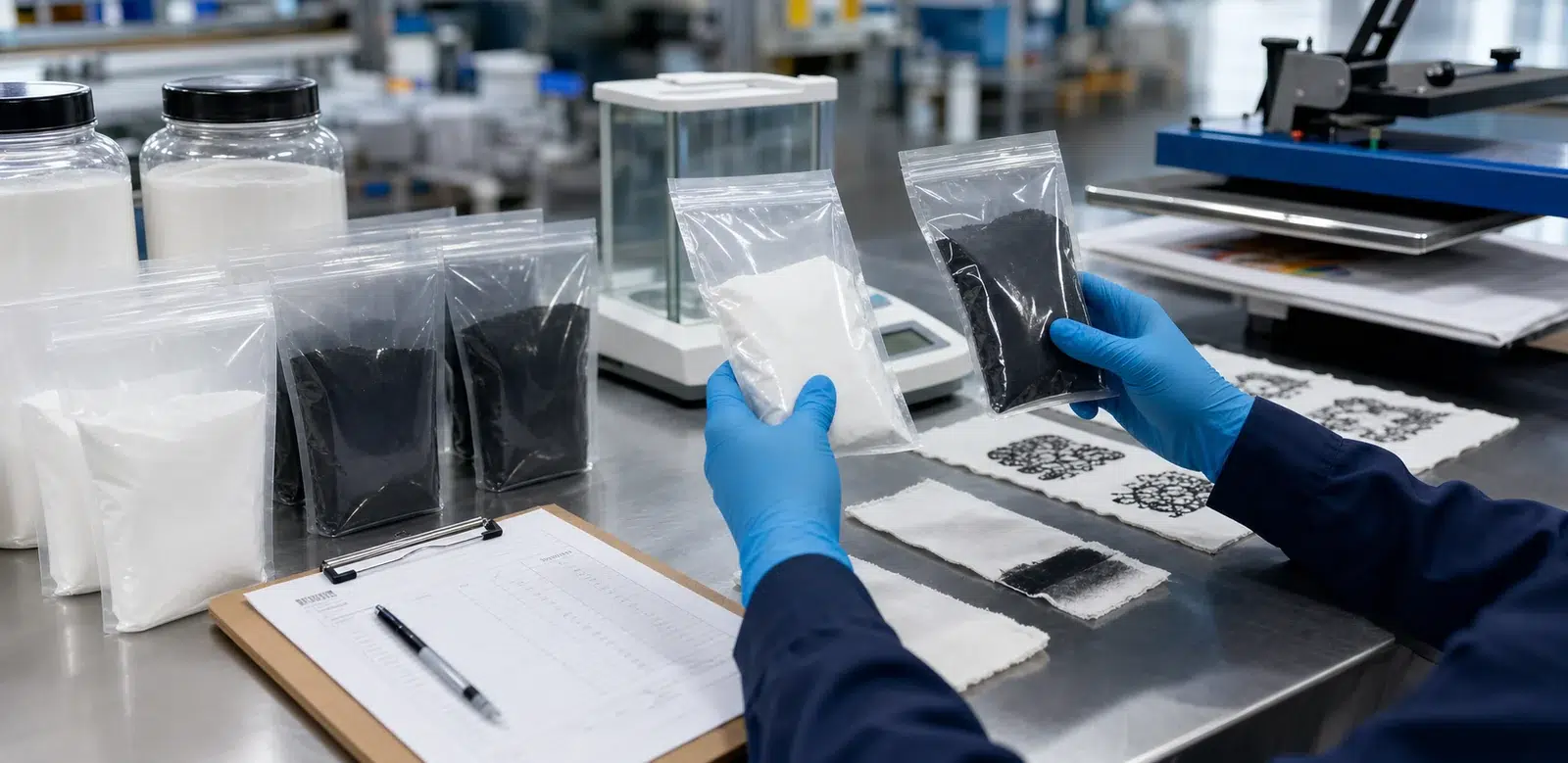
Run the supplier the way experienced buyers do: request a QC-passed sample, wash-test it against your current powder at your real press settings, and confirm the batch record before the first bulk PO.
A supplier that ships a free sample and a batch certificate is telling you the container will match the sample. One that only quotes a price is asking you to gamble.
→ Get a bulk price list or start a sample orderQuality Control & Compliance — Batch Testing & Certifications
Overcoming the Trust Barrier
The strongest objection an unknown supplier faces is not price — it is trust. One documented field failure captures it exactly: a transfer that peeled after a single wash, traced to “a bad batch of adhesive powder, most likely exposed to moisture.” Batch variance is the fear, so batch discipline is the answer, and it is a process we can show rather than a slogan.
“We test every production lot for melt point, particle distribution and shaker flow before it is packed, and each bag carries that lot’s number and grade. The sample a buyer approves has to be the container they receive.”
100% Batch Tested
Melt point, particle size & shaker flow, per lot.
Lot Traceability
Batch number + grade on every bag.
REACH-aligned
Formulated to Annex XVII / SVHC limit values.
OEKO-TEX® ready
To STANDARD 100 limit values; docs on request.
Chemical Compliance Framework
On chemical compliance, we state carefully what is true. OEKO-TEX® STANDARD 100 certifies a finished textile article, not a loose powder — so the honest claim is that our DTF powder is formulated to meet the limit values. For the powder as a chemical, the relevant frameworks are EU REACH (SVHC restricted below 0.1% w/w) and the ZDHC MRSL. Compliance documentation is available on request. Wash-fastness is assessed against ISO 6330 laundering methods.
INTERACTIVE GALLERY
What buyers should verify against any supplier — us included — is concrete: ask which restricted-substance lists the powder is formulated against, ask for a certificate number you can check independently, and ask whether skin-contact apparel (OEKO-TEX Class II) and children’s wear are in scope.
×
![Zoomed Certification]()
Advanced Wholesale DTF Powder Digital Utilities
DTF Powder Grade Selector
Match a Tengyang DTF powder grade to your fabric and design. Recommendations follow our production spec grid — use them to write a grade into your RFQ.
Bulk vs Retail DTF Powder Cost Calculator
See what wholesale DTF powder saves your shop over a year. Powder is only 3–5% of a print’s cost — but it is the line item most sensitive to bulk buying.
DTF Powder Troubleshooter
Pick the failure you are seeing. Most DTF powder problems trace to cure, storage or spec-match — not always the powder itself.
FAQ — DTF Powder (Wholesale)
What is DTF powder, and is it necessary?
DTF powder is the TPU hot-melt adhesive that bonds a Direct-to-Film print to fabric. It is not optional — without it the ink has nothing to fuse the design to the garment. The choice is not whether to use powder, but which grade and what quality of powder.
How many washes should a good DTF powder survive?
A quality TPU powder typically holds 50–100+ home-wash cycles at 40–60°C without cracking or peeling. Treat any “wash-proof” claim with no test method behind it — ISO 6330 / GB T 8629 or AATCC laundering — as marketing, and wash-test a sample yourself.
Why does my DTF powder keep clumping even in a controlled room?
TPU powder is hygroscopic, so it absorbs moisture faster than most shops expect — clumping usually points to storage and packaging, not brand. Keep it sealed below 50% relative humidity with desiccant, buy in a moisture-barrier bag, and rotate stock so opened powder is used within 6–9 months.
Can I use any DTF powder with any printer and film?
No — powder, film and press have to be spec-matched. A heat-resistant powder with a higher fusing temperature needs a matching heat-resistant film; mixing a low-melt powder with a cold-peel-only film, or a hot powder with a film that warps, is a frequent cause of failed transfers. Match the grade to your press and film, which is why we publish the full spec.
White or black powder — which do I need?
White is the versatile default for light and dark garments. Black is for dark fabrics where a white adhesive halo would show, and it helps against dye migration on polyester — though on heavily-dyed poly, an anti-sublimation grade plus a lower press temperature does more than powder color alone.
What is your MOQ, and do you offer OEM or private label?
Stock grades ship by the 20–25 kg bag. OEM and private-label formulation — custom melt point, particle grade, color and your packaging — runs from a 500 kg order. Request a quote with your fabric mix and press settings and we will spec the grade.
Is your powder 100% TPU, or is it blended with polyamide?
Our stock grades are 100% TPU with no polyamide extender — the blend that gives cheap powder its stiff, plastic hand. Where an application needs polyamide or polyester properties, we formulate to it as a disclosed OEM order and state it on the spec, rather than blending it into a bag labeled “TPU.”
Is DTF powder safe to handle?
Handle it as a fine powder: wear a mask and work with ventilation, since melting TPU during curing releases fumes that need HEPA-plus-carbon filtration or extraction. Formulated to REACH and OEKO-TEX STANDARD 100 limit values, the cured adhesive is suited to skin-contact apparel; compliance documentation is available on request.


![Oz per Square Yard to GSM [Formula, Chart & Calculator]](https://tengyangfilm.com/wp-content/uploads/2026/08/oz-per-square-yard-to-gsm-featured-150x150.png.webp)
![Garment Accessories TPU Film [Production Guide]](https://tengyangfilm.com/wp-content/uploads/2026/07/garment-accessories-tpu-film-guide-featured-1-150x150.png.webp)


