TPU Film Manufacturer, Custom Thermoplastic Polyurethane Film for Technical Bonding & Lamination
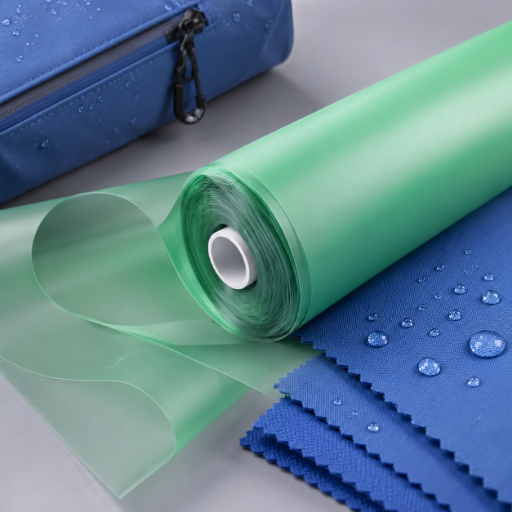
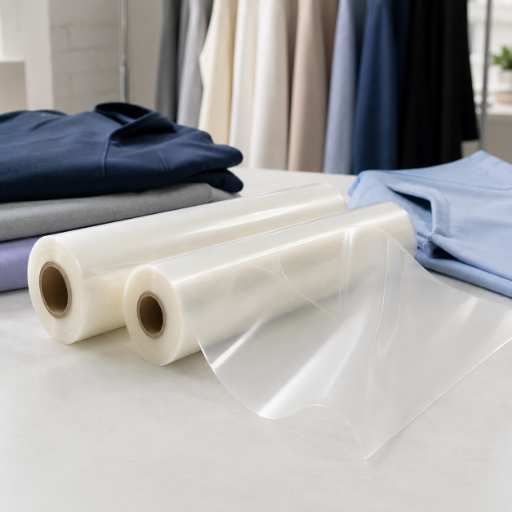
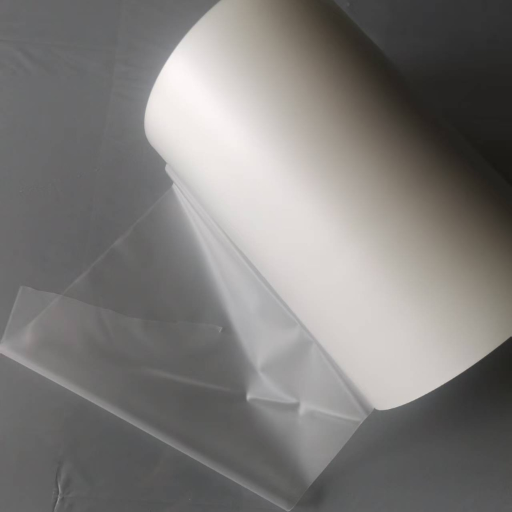
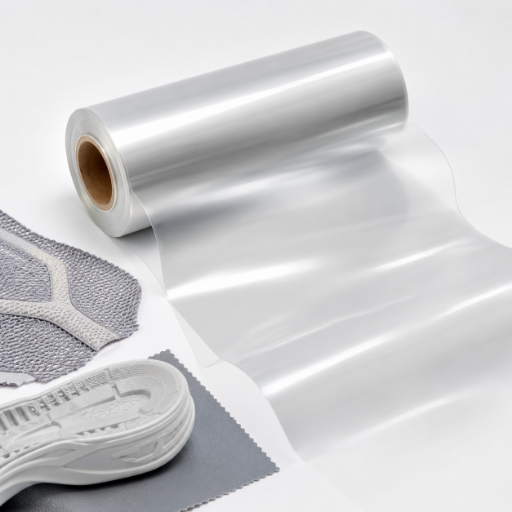
TPU film – thermoplastic polyurethane film – is the unsung hero elastomer film that makes waterproof-breathable clothing, medical dressings, shoe bonding and automotive-interior laminations possible. At Teng Yang, we manufacture this TPU film directly at the factory in China, made-to-order to your specifications for grade, thickness, width, melt point and color, not sold off a fixed menu.
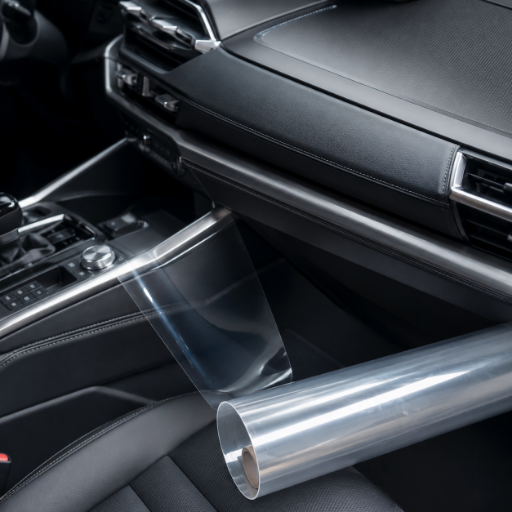
Scope Note: this is industrial & technical TPU film used for bonding, lamination and creating functional layers – we don’t supply automotive paint protection film (PPF) or car wrap. If you’re looking for clear-bra automotive film, we aren’t your supplier.
Why Sourcing the Right TPU Film Is Harder Than It Looks
The TPU Industry Sourcing Roadblocks
Go to any other page for TPU film and you’ll see adjectives like “high durability,” “superior water vapor transmission rates (MVTR)” and “outstanding clarity,” followed by a Contact Us button. From what our customers tell us, that formula is a dead end on three fronts. One, the specification sheets are hollow; you can’t compare polyester versus polyether based on hardness, operating temperatures or MVTR because no one publishes the numbers. Two, the term “TPU film” has been thoroughly polluted by automotive paint protection film, meaning half the search results you’ll find will be about car wraps. Three – and this is the step that causes most projects to grind to a halt – you can’t find a factory that will produce film according to a truly custom specification.
“I need a specific kind of film, and I’m struggling to find any suppliers who are willing to make it for me.”
Chemistry Mismatch & Performance Science
Thermoplastic polyurethane film is a laminated, extruded elastomer that possesses the elasticity of rubber and the ease of processing characteristic of plastic. Its dual nature makes it an ideal material for applications requiring seam-free garment bonds, breathable medical laminates and wear-resistant footwear – but it also explains why using the wrong grade will inevitably lead to product failure in the field. Film that discolors when exposed to the sun, or breaks down in a humid environment, was typically due to a chemistry mismatch rather than a bad batch. Consequently, the primary objective of this page isn’t simply to sell you “TPU film.” Our goal is to help you select the appropriate grade at the right specification from a manufacturer that will actually take on your order.
TPU Film Grades We Manufacture, the Two-Axis Chemistry Behind the Spec
Property data referenced to ISO 527-3 (tensile) and transparent TPU film patent CN101955646A.
Here’s the most common mistake in listings for TPU film: they present “polyester,” “polyether” and “aliphatic” as interchangeable choices on a single menu. In reality, TPU chemistry operates on two independent axes, and you must make one selection from each. The first axis is the soft segment, also known as the polyol, which can be either polyester, polyether, or polycaprolactone; it determines the film’s resistance to water, oil and low temperatures. The second axis is the hard segment, known as the isocyanate, which can be either aromatic or aliphatic; it controls UV and color stability. Contrary to popular belief, polyether doesn’t provide UV stability; that trait comes from the aliphatic hard segment. If you mix up these two, you risk producing a film designed for outdoor use that will fade significantly within a single season. It’s worth remembering that neither axis is a hierarchy of quality; rather, each grade is a compromise tailored to a specific application, not simply a step up from the previous one.
Because we run all five building blocks, a recommendation is a fit, not a catalogue restriction. Dive into dedicated grade pages for more details:
Soft segment
Polyether TPU Film
Low-Tg, high-MVTR, hydrolysis-resistant film for medical and breathable textile lamination.
Axis 1: Soft Segment (Polyol). Ranges depicted represent population envelopes for a range of commercial grades; each individual order is manufactured based on a specific datasheet falling within these bands.
Axis 2: Hard Segment (Isocyanate). This axis, not the soft segment, is responsible for color and UV performance.
Hard-segment grade
UV / color behavior
Optical clarity
Relative cost
Best-fit film use
Aromatic TPU
ambers/yellows under prolonged UV
good, can still be optically clear
economical
indoor, hidden bond layer, cost-driven volume
Aliphatic TPU
color-stable, non-yellowing
retains clarity outdoors
premium
outdoor, optical, clear surface films
Engineering note, why the numbers, not the adjectives, decide
“Shore 90A, clear, tough” means two grades that act wildly different in service. A polyester grade that only adsorbs 0.03% moisture will stay dimensionally stable on a humid line. A polyether grade that’s also 90 Shore will soak up moisture but shrug off hydrolysis, venting at over 5,000 g/m²/day. Tensile ultimate for unfilled film typically falls in the 39 MPa range and can range up to 70-90 MPa on top. Caution: we tell every buyer never to trust glass-filled TPU datasheets when speccing film – their elongation collapses to 10-86% because those are rigid engineering grades, not film.
Not sure which axis pair fits? Send your application and we’ll recommend a grade →
TPU Film by Application, Routing to the Right Line
Medical-device use is governed by FDA / ISO 10993-1 biocompatibility guidance.
The material is the grade; the format, surface, and lamination system are application-driven. Breathable membranes, for instance, aren’t simply “a roll of film.” There’s chemistry, a target MVTR, a target water-pressure rating, laminating compatibility, an adhesive system, a feel for the fabric, and stability for the roll. That’s why we specify the film for the finished-product structure, not for thickness alone. Select your final product:
Custom TPU Film Specifications, Thickness, Width, Melt Point, Hardness & Color
Hardness graded to ISO 7619-1 (Shore durometer); film thickness to ISO 4591.
This is where being the factory earns its keep. We don’t simply match your product to a stock SKU; we align five variables — what we call the 5-Variable Custom Spec Envelope — with your requirements, and we quote on a concrete spec so that a TPU film price accurately reflects your actual gauge and width, rather than just a thickness guess.
Thickness
thin functional film through heavier sheet (µm and mm both quoted)
bond-line strength, hand-feel, and film yield (m² per kg) all move with gauge
Width
slit-to-width or wider master roll
cuts converting waste; matches your lamination line
Melt point
low / medium / high activation window
must sit below your substrate’s heat tolerance yet above service temperature
Hardness
Shore A ~40 up to Shore D range
flex vs. structural stiffness for the finished part
Color / surface
clear, matte, tinted, custom color match
appearance-grade vs. hidden bond layer
Buyer advisory, spec beyond thickness
Perhaps the most common error we encounter is a buyer ordering “0.1 mm TPU” only to find it behaving differently after lamination. The same film performs in entirely different ways when you incorporate adhesive, textile, a wash cycle, or sterilization. Tell us about the finished product’s structure and the processing steps involved, including whether the film must be heat sealable, RF-weldable, or adhesive-coated, and we’ll determine the best grade and gauge for the job and verify it with a sample prior to any bulk production. This single measure eliminates most re-order issues.
We maintain five different building blocks – polyester, polyether, polycaprolactone, aromatic, and aliphatic – in production. In instances where a customer presents a photograph of a peeling seam or yellowing panel, the problem is nine out of ten times not a batch failure but rather a case of mismatched axes. Consequently, we will spec to avoid the failure mode you want to prevent, then confirm with a sample first.
TPU Film vs Alternatives, PVC, PE, and Aromatic vs Aliphatic
It’s important not to assume TPU film is always the solution, as this can damage your credibility. While PVC is often the best option due to its lower upfront cost, simpler application, and wide range of colors, PE remains a cost-effective choice for raw material pricing.
TPU, however, offers advantages in the long run, particularly in terms of abrasion resistance, flex fatigue life, cold temperature performance, and freedom from plasticizers. In essence, the trade-off is clear: TPU provides enhanced durability and service life, whereas PVC offers a lower sticker price. These are tangible benefits, not simple yes/no questions:
SCANNING_VISUAL_01
Technical Spec Matrix
Property
TPU film
Flexible PVC
PE film
Elongation at break
up to ~1000–1580%
150–400%
100–600%
Abrasion (relative)
high (Taber 2.5–127 mg/1k)
moderate
low
Low-temp flexibility
to −50 °C (polyether)
stiffens, needs plasticizer
good but low strength
Plasticizer / phthalate
none required
phthalate plasticizers common
none
Halogen-free
yes
no (chlorine)
yes
Upfront cost
higher
lowest
low
Recyclability
thermoplastic, re-processable
difficult
good
Chemistry Axis
The decision on the chemistry axis is just as important: aromatic TPU is the budget choice for indoor or hidden layer applications, but it yellows in continuous UV exposure, whereas aliphatic TPU retains color and clarity outdoors but at a cost.
“Damaged aka flaking, shedding, peel or crack a few months after” — verbatim quote from outdoor misapplications of aromatic TPU.
Lifecycle & TCO
PVC’s low sticker price often reverses over service life through faster degradation and replacement — the initial saving diminishes as UV, flex and weathering take their toll. Request an application-specific lifecycle analysis.
Honest limitation:
PVC does not always fail in two-to-five years; indoor, static, and non-UV service can perform remarkably long-term without warranting a TPU premium.
Standards: ISO 10993-1 biocompatibility · FDA ISO 10993-1 guidance.
TPU is inherently BPA-free and halogen-free, which is why it’s often used in lieu of plasticized PVC for applications in contact with the skin and around food. We build to these standards and can provide third-party testing data upon request.
ISO 10993-1/-5
Biocompatibility and cytotoxicity qualification for medical-grade formulations.
USP Class VI
Highest medical material qualification environmental safety standard.
Manufacturing quality system ensures consistent, repeatable excellence.
How film specs are actually verified
Tensile is evaluated according to ASTM D882 while hardness is determined using ASTM D2240 (Shore A/D). Water vapor transmission rate (MVTR) is measured using ASTM E96, with a note that any MVTR value is meaningless without an accompanying testing method. Accelerated aging is achieved by 7 days of exposure to 100°C heat and 7 days of immersion in 80°C water to assess hydrolysis.
One compliance honesty point
Food-grade and medical-grade are not interchangeable. A TPU film used for food-contact purposes is not automatically deemed to have passed ISO 10993 biocompatibility; that’s a separate risk-management process. If you are working on a medical device, we can help you define the precise end points for your device class instead of using generic “biocompatible” claims.
[ + ] ISOMETRIC.DECK
STAGE.FOCUS // 06
SCALE.1600PX
TENGYANG.TPU
Tengyang TPU Film Intelligent Manufacturing Scene
Exploring our smart production lines, cutting-edge laboratories, dust-free workshops, and our strategic global business footprints.
01 / 22
Quality system aligned to ISO 9001
Sourcing from a Factory-Direct Manufacturer, MOQ, Lead Time, Samples & OEM
When people search for materials, they often express frustrations with a “sample-to-production gap,” in which the first sample they receive is “nothing like the subsequent orders” or you hit an inconsistent quality that borders on a bait-and-switch — the drop from the approved sample is dramatic. We’ve specifically designed our manufacturing process to prevent such issues. Other customers have reported that their “MOQs from Chinese factories are destroying inventory optimization,” leading them to invest in costly reorders or hold excess inventory just to meet minimum order quantities.
Hover to inspect film layers
01
Samples first, always
We ship representative samples up front, the same lever buyers repeatedly say made a supplier trustworthy, so you validate hand-feel, bond and spec before committing volume.
02
Sample = production
The production run is held to the qualified sample. Consistency between what you approved and what ships is the whole point of a factory relationship, not a lucky first order.
03
Workable MOQ
Low MOQ for custom runs so you can prototype and scale without over-committing inventory on order one.
04
OEM / private label
Custom formulation, width, melt point and color under your brand, with technical support through commissioning.
Advanced TPU Film Engineering Solutions
TPU Film Grade Selector
Configure your application parameters below to receive an instant two-axis material recommendation (Soft Segment × Hard Segment) tailored to your performance requirements.
Evaluate real property ranges across flexible film alternatives. Shift the analytical weight to identify the true engineering fit for your application.
Explore comprehensive technical insights and functional details regarding our industrial-grade TPU film solutions.
TPU film is thermoplastic polyurethane extruded into a thin, bonded sheet. It behaves like a hybrid of rubber and plastic, highly elastic (elongation into the hundreds of percent), abrasion-resistant, and heat-weldable, which lets it bond fabrics, seal seams and laminate substrates that rigid films can’t.
No. PPF is a consumer automotive product for protecting car paint. Industrial TPU film, what we make, is a functional bonding and lamination material for textiles, medical, footwear and industrial parts. They share the base polymer but are entirely different products and grades.
Choose by service condition, not by “which is premium.” Polyester gives higher abrasion and oil/chemical resistance with dimensional stability (low moisture uptake). Polyether gives hydrolysis resistance, cold flexibility to about −50 °C, and high breathability (MVTR). Send us the application and we’ll match it.
Aliphatic TPU. Yellowing is governed by the hard segment (isocyanate), not the polyol, a common mix-up. Aromatic TPU is economical but ambers under prolonged UV; aliphatic stays color-stable and clear, at a higher cost.
Yes, thickness, width, melt point, hardness and color are all tunable, and we run low MOQ for custom orders. This is the exact gap many buyers describe when they say “I want a very particular film” and can’t get bites from companies willing to make it. Send the spec and we’ll confirm feasibility and a sample.
TPU is BPA-free and halogen-free. Medical-grade formulations are directed to ISO 10993 biocompatibility and USP Class VI, with test reports on request. Note that food-grade and medical-grade are separate qualifications, a food-contact film is not automatically biocompatible.
Yes, in polyether membrane grades. The film blocks liquid water while passing water vapor, moisture-vapor transmission for breathable polyether grades ranges widely (hundreds to tens of thousands of g/m²/day depending on formulation and test method). We tune MVTR to your garment or medical target.
Insist on samples first, then hold the production run to the approved sample, and de-risk with a small pilot before a large PO. That’s our standard flow, consistency between the sample you approve and the film that ships is the point of a factory-direct relationship.











![DTF Materials Incoming Inspection Checklist [Buyer Guide]](https://tengyangfilm.com/wp-content/uploads/2026/09/dtf-materials-incoming-inspection-checklist-featured-150x150.png.webp)
![Hot Melt Adhesive Powder Combustible Dust Risk [Checklist]](https://tengyangfilm.com/wp-content/uploads/2026/09/hot-melt-adhesive-powder-combustible-dust-risk-featured-150x150.png.webp)


