Get in Touch with Teng Yang Company


PES (Copolyester) Hot Melt Adhesive Film
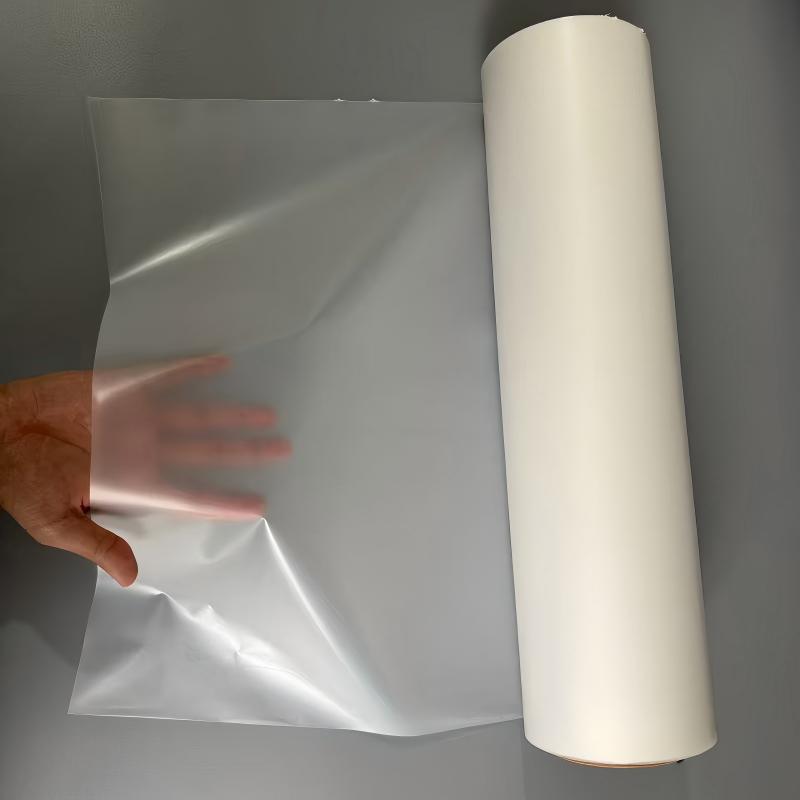
Teng Yang makes and supplies PES hot melt adhesive film for manufacturers looking for a solvent-free bond that can withstand dry-cleaning, frequent washing, and exposure to sustained heat – from garment linings to automotive interior trim. Each roll is manufactured at our Chongming, Shanghai facility, with OEM customization available for thickness, width, melting point, and color.
Solvent-Free
VOC-Free Process
OEM-Ready
Custom Formulation
CORE METRICS
95–125°C
Typical PES Melting Range¹
Film / Web
Format Options
4
Customizable Parameters²


When Standard Adhesives Fail, Why Manufacturers Choose PES Hot Melt Film
Industry Challenge
A hot melt adhesive film which bonds on day one, but peels, cracks or fails after three dry-clean cycles isn’t a bonding solution;
…it’s a warranty cost, a hidden repair job waiting for the garment to ship out.
That’s what pushes garment, footwear, and leather manufacturers away from generic hot melts and toward PES copolyester chemistry specifically, because PES is formulated for linings, interlinings, and label attachment that has to survive repeated laundering, dry-cleaning solvents, and sustained heat above the failure tolerance most quality programs will accept.

Adhesion Stability DATA
Clean adhesive failure engineering for OEM substrates.
01 // Engineering Standard
Most spec sheets skip a distinction that separates an inferior product from a good solution, one you’ll notice too late if it’s missed: a stronger bond isn’t always a better bond.
According to engineering literature, it’s preferable for the bond to fail cleanly and adhesively (peeling off without damaging the underlying substrate) rather than cohesively (ripping out fibers from the substrate or leaving residue behind).3
A hot melt may have strong peel/shear numbers listed on a competitor’s datasheet but will still perform poorly for a particular fabric, coating, or dry-cleaning process. For this reason, Teng Yang engineers every OEM formulation around your substrate and application first, treating material selection and sample testing as more decisive than chasing an isolated high spec.
02 // Chemical Properties
PES hot melt adhesive film is a thermoplastic copolyester – solid at room temperature, melted by heat, and re-solidified on cooling with no solvent evaporation step. That’s the mechanism behind three practical advantages over solvent-based bonding:
- no dedicated ventilation system for VOC extraction,
- no drying/curing dwell time in the line, and
- no solvent-handling compliance burden on your shop floor.
That’s also what we mean by dependable PES adhesive performance in practice: consistent adhesion across a wider service-temperature band, without the brittleness some bonding materials show at high temperature extremes.
Elasticity matters just as much as raw bonding strength here – a film that posts a high peel number on a datasheet but cracks under repeated flex or a cold-weather shipment isn’t solving the manufacturer’s actual problem.
Compared with TPU and EVA – the two other hot melt chemistries most commonly substituted for PES – copolyester’s particular strengths are chemical resistance to dry-cleaning solvents and retained flexibility after repeated wash cycles, which is why it dominates in lining lamination and label-attachment applications specifically (see the chemistry comparison below).
Teng Yang PES Hot Melt Adhesive Film, Specifications & Formats
Every Teng Yang hot melt adhesive film roll ships as continuous film, with or without silicone release paper, and is formulated within the copolyester chemistry class summarized below. Unlike a fixed-catalog SKU, copolyester hot melt performance is genuinely batch- and formulation-dependent – the industry-typical ranges below are a starting reference for your technical conversation with our team, not a substitute for a sample and a technical data sheet on your specific substrate. Request a detailed technical data sheet before finalizing a spec.
CAD Isometric Matrix

| Parameter | Typical Copolyester (PES) Range | Source |
|---|---|---|
| Melting Point | 95–125°C | US4732964A1 |
| Glass Transition Temperature | 0–10°C | US4732964A1 |
| Format | Film, with/without release paper | Teng Yang product line |
| Application Temperature Range | Approx. 100–140°C melt pot6 | Industry process reference |
Note on thermal-stability testing: ISO 10363:1992 is a test method for measuring how a hot-melt adhesive’s viscosity and softening point change under prolonged heating (its test apparatus is rated up to 260°C) – it is not itself a performance spec, and a 260°C test-apparatus ceiling is not a claim that any hot melt film remains stable at that temperature. We reference it as the methodology our internal QC aligns with, not as a product rating; accessed via the iTeh Standards catalog (a commercial standards reseller), not the ISO/CEN body directly.
PES sits alongside four other chemistries in Teng Yang’s hot melt film range – TPU (thermoplastic polyurethane), an EVA hot melt adhesive line (ethylene vinyl acetate), a PA hot melt adhesive film line (polyamide), and a PO hot melt adhesive film line (polyolefin) – each with a distinct polymer backbone and a different adhesion profile. PES itself is a copolyester: chemically related to standard polyester (PET), but formulated with a much lower, hot-melt-compatible melting point rather than PET’s high processing temperature.
One place this gets confused: the release liner some PES film ships on is itself often a PET film – a polyester carrier sheet, completely separate from the PES adhesive layer it protects. If a technical data sheet mentions “PET” in the release-paper context, that’s the carrier, not the bonding chemistry.

Film delivered on silicone release paper is easier to spot accurately before it’s activated (good for small patterned elements such as collar stays or backing labels), but it creates an extra step (peel and throw away) for the production line.
Supplied without release paper, film rolls through the roll-to-roll lamination at faster speeds for high-volume runs but demands very accurate web tension control to avoid the adhesive from self-tacking inside the roll before it arrives at the applicator. Let’s know how you’re applying and we’ll suggest the most appropriate delivery.

Production Control Console
Teng Yang Custom OEM Variables
Teng Yang’s OEM customization is based on four parameters we define per order: thickness, width, melting point, and color – not a fixed catalog SKU. If your job needs a lower activation temperature for a heat-sensitive material, or a wider roll for your laminator, we change our formulation, not your tooling.
Custom Var 01 Thickness
Custom Var 02 Width
Custom Var 03 Melting Point
Custom Var 04 Color
Decision Matrix: Format by Application
| Application | Recommended Format | Why |
|---|---|---|
| Label & small-pattern attachment | With release paper | Precise placement before activation |
| High-volume roll lamination (lining/interlining) | Without release paper | Faster line speed, no peel-discard step |
| Automotive interior trim (headliners, door panels) | Without release paper, wider width | Continuous coverage across large panel substrates |
| Heat-transfer / reflective material bonding | With release paper, lower melting point | Protects heat-sensitive print/reflective layer |
PES vs. TPU vs. EVA Hot Melt Film, Performance Comparison
Picking the wrong chemistry here is a costly mistake, not a minor one – a garment line that specs EVA for a dry-clean-only product is signing up for a 100% rework risk on the first returned batch. No supplier in this space publishes a structured, side-by-side chemistry comparison with cited test methods – competitor pages either bury the comparison in prose or skip it entirely, because doing it properly means citing test methods that expose the limits of every chemistry, not just the competition’s. Here’s the structured version Teng Yang provides, built against real ASTM and ISO test-method standards rather than adjective claims.
SUBSTRATE A
HOT MELT FILM (PES/TPU/EVA)
SUBSTRATE B
| Property | PES (Copolyester) | TPU (Polyurethane) | EVA |
|---|---|---|---|
| Dry-cleaning solvent resistance | High — core selection driver for garment lining | Moderate | Low — generally avoided for dry-clean garments |
| Post-wash flexibility retention | High | High | Moderate — can stiffen with repeated washing |
| Typical melting point band | 95–125°C¹ | Generally lower, application-dependent | Generally lowest of the three, application-dependent |
| Relative material cost | Higher | Highest | Lowest — common incumbent for cost-sensitive runs |
| Peel/shear test method (for your own QA) | ASTM D903 (peel/stripping) · ASTM D1002 (shear)7 | ||
Peel and shear values are process- and substrate-specific; ASTM D1002 warns that reported values may vary with adherend, substrate preparation, test environment, and substrate, therefore it should not be considered a design allowable.7 Unlike a marketing spec sheet, this is the honest version, the unvarnished truth: no single chemistry wins on every axis, and the “winning” material isn’t always the one with the big number in a column. Test these values on your own substrate before deciding on chemistry.
“When customers ask which chemistry to use for lining lamination versus automotive interior trim, the deciding factor is almost never the highest number on a spec sheet, it’s whether the bond survives the specific combination of heat, dry-cleaning solvent, or long-term flex the application actually sees. We ask about the substrate and end-use environment before recommending PES over TPU or EVA, not the other way around.”
— Senior Application Engineer, Teng Yang
For production lines that already run across our full chemistry range, TPU, EVA, PA, PES, and PO, the material-selection question usually isn’t “which is best” in the abstract but “which is best for this substrate and this end-use.” A complete material selection guide spanning all five chemistries is available in our PA hot melt adhesive film guide.
Need a side-by-side on your specific substrate? Request a Custom Comparison →
Application Performance, Garment, Footwear & Leather Bonding
Teng Yang formulates this hot melt film for fabric use in four application categories where the risk of choosing the wrong chemistry is highest, specifically because of dry-cleaning and wash resistance – not because PES isn’t always the right answer for every substrate, or a universal substitute for TPU or EVA every where. Each use case below gets a different formulation lean, including hot melt adhesive film automotive interior trim as its own narrowly-scoped category:
SYS_TOLERANCE ACTIVE
Engineered for extreme wash resistance and elasticity retention in precision OEM apparel bonding.
01 /
Garment Accessories & Seamfree Underwear
Garment Accessories & Seamfree Underwear
Label attachment, interlining, and seamfree-underwear bonding are the applications where PES film most directly impacts the life of the finished product’s warranty. Our Copolyester film is routinely requested by customers specifying “laundry-resistant” adhesive precisely because garments made with the film need to be laundered hundreds of times without delamination at seams and label interfaces.
The film need to do double duty on seamfree underwear-it has to bond neatly and at a low add-on weight, or the visible line on a thin garment could be objectionable. Moreover, it must hold under the normal wear stress of an elastic garment; this is where elasticity retention, not just simple peel strength, proves critical to whether a run of seamfree underwear makes the grade.
02 /
Footwear
Footwear
PES hot melt copolyester film has decades of use in footwear construction, melting the stiffening-cap material into the shoe upper and lining pieces under heat and pressure, a usage pattern detailed in adhesive chemistry patent literature as early as the 1980s.1 For a shoe company, this means the PES film must hold the stiffening cap when it’s heated and pressed into place as part of the shoe molding or shaping process and then it must hold as the rest of the shoe is constructed, before the completed part is shipped to the consumer.
03 /
Leather Lamination
Leather Lamination
The inherent variability in texture and oil content across a single hide make leather substrates challenging to bond cleanly. PES film’s chemical resistance profile can handle the finishing oils and conditioners that most leather makers use, and that are problematic with adhesives more prone to plasticizer migration.
04 /
Automotive Interior, Narrowly Scoped
Automotive Interior, Narrowly Scoped
Copolyester hot melt film is also used in automotive interiors for non-electronic trim, headliners, door panel coverings, and back-injection-molded interior pillars, where the bond has to last for the life of the vehicle without becoming embrittled.8 This suitability claim is scoped strictly to interior trim lamination. It is not suitable for electronic-component assembly or applications where a RoHS ten-substance electronics compliance declaration is needed, and we’ll tell you plainly if that’s the case for your application.
05 /
Also Suitable For:
Also Suitable For:
heat transfer printing, reflective material lamination, packaging (sealing and bonding carton/foam-lined packaging inserts), foam-backed automotive components, and building decoration bonding, lighter-touch applications where PES’s general thermoplastic bonding properties apply without the dry-cleaning-specific advantage being the primary driver. In heat-transfer and reflective-material work specifically, melting-point customization matters more than in garment lining: the ink or reflective coating is often more heat-sensitive than the base fabric, so formulating toward the lower end of the copolyester melting range reduces the risk of scorching the printed or reflective layer during activation.
Certifications & Quality Assurance
The space between RoHS and OEKO-TEX is where customers get stung. Assuming the two are interchangeable is an expensive error, since the two certifications assess entirely different factors.
We prefer to provide documentation for what we’ve actually tested rather than to imply wider certifications than we can substantiate – even at the risk of losing a sale to an overstater. What follows is an honest representation of our documentation status.
SGS Test Report: PASS RoHS Directive (EU) 2015/863 Hot Melt Adhesive Film (TPU line)
SGS Test Report: PASS RoHS Directive (EU) 2015/863 Hot Melt Adhesive Powder
SGS Test Report: PASS RoHS Directive (EU) 2015/863 Hot Melt Adhesive Web (TPU line)
Reports were produced on our TPU-chemistry film, web and powder products on the same production line and process controls that we use for our PES product. Our production line has been independently tested by SGS against RoHS Directive (EU) 2015/863 (covering lead, mercury, cadmium, hexavalent chromium, PBBs, PBDEs, and four phthalates, each capped at 0.1% by weight). Reports on file (2020-2023, all Pass) were run on our TPU-chemistry lines, produced on the same Chongming, Shanghai production line and under the same raw-material sourcing and process controls as our PES line.
*We have not yet run a PES-labeled sample through SGS separately, and we’ll tell you plainly if that distinction matters for your compliance file rather than blur it.

DOC_01 // TEXT_MATERIAL_DATA

DOC_02 // SUBSTANCE_SCREENING_P1

DOC_03 // SUBSTANCE_SCREENING_P2

DOC_04 // PROCESS_CONTROL

DOC_05 // AUDIT_VERIFICATION

DOC_06 // TECHNICAL_QC_RECORD
01 / 06
What We Don’t Claim
RoHS is a concrete, verified attribute-but it is not a substitute for OEKO-TEX STANDARD 100. OEKO-TEX is a product-specific certification designed to verify up to 1,000 chemical substances for prolonged skin contact. This product line currently does not have OEKO-TEX STANDARD 100 or REACH SVHC declarations on file. Please let us know if your program requires either, and we’ll be honest with you about lead time instead of vague “in progress.”
Quality Control Process
Teng Yang proactively manages quality risks before they arrive at your facility. Every production run is checked for incoming materials, melt viscosity and visual appearance using standard-setting ISO test methods, and samples are retained.
OEM Pre-Production Approval: We provide a written approval pre-production sample from your finished batch for your sign-off before full production begins. This adds 2-3 days lead time but removes the most common source of rejection: unexpected difference in color or thickness.
How to Order, OEM Customization by Thickness, Width, Melting Point & Color
The biggest mistake buyers make when switching adhesive-film suppliers is comparing quoted unit price alone – a cheaper-looking quote isn’t always the lower-cost option once landed cost is factored in, and that gap is exactly where budgets get blown after the order ship. Buyers evaluating a new hot melt adhesive film supplier consistently tell us price is a factor but rarely the deciding one – supplier reliability, customization flexibility, and total landed cost (not just unit price) carry more weight in the final decision, because a delayed or rejected shipment costs far more than a few cents per meter of film.11 Here’s how ordering actually works with Teng Yang, and why we quote it this way.

PARAM_01Thickness
PARAM_02Roll Width
PARAM_03Melting Point
PARAM_04Color Match
Teng Yang provides formulation to your specification on four parameters: thickness, width, melting point, and color. This isn’t a limited “choose from three SKUs” menu – tell us your substrate, application temperature ceiling, and line speed, and we’ll formulate against those constraints rather than asking you to adapt your process to our catalog.
Since we custom-formulate each order, we don’t maintain a printed per-roll pricing schedule. Price points move up or down depending on: film thickness and width (amount of material), the complexity of the melting point formulation, direct film vs release paper application, the size of the order, and whether the application require color matching. Contact us for a detailed quotation based on your application parameters.
“Review prices for total landed costs so your customs, duties, logistics and inventory carrying costs are considered” – that’s the exact advice we see procurement teams give each other when evaluating overseas hot melt adhesive film suppliers, and it’s the right instinct: total landed cost matters more than the quoted unit price in isolation.11 Ask us about container consolidation options and standard hot melt adhesive film HS code classification for your customs declaration; we handle this conversation as part of every export quote, not as an afterthought once the order is confirmed. If you’re comparing us against a hot melt adhesive film manufacturer USA-based, landed cost and OEM customization flexibility – not just the sticker price – usually decide which is actually cheaper.
Free samples are available for technical evaluation before you commit to a production order. For OEM-specific formulations, we secure a pre-production sample to confirm thickness, width, melting point, and color with your sign-off prior to beginning the production run. It’s that simple step that virtually eliminate the possibility of rejecting a production run. The standard turnaround for production runs from sample approval to shipment is generally between 14 and 28 days.
Manufacturers switching from solvent-based bonding to hot melt film typically report eliminating dedicated VOC ventilation equipment and solvent-handling compliance overhead — the exact savings depend on your current solvent system and local environmental compliance requirements, so we won’t quote you a number we can’t source.
Source: industry-wide solvent vs. hot melt adhesive comparisons4 — not a Teng Yang-specific measured figure.
Compliance Checklist
TOOL // 01
Chemistry Selector
Find the right hot melt adhesive chemistry tailored to your specific material and application requirements.
TOOL // 02
OEM Spec Builder
Generate custom adhesive specifications designed to meet exact Original Equipment Manufacturer (OEM) standards.
TOOL // 03
Melting Point Advisor
Determine the optimal melting point parameters to ensure secure bonding without damaging your substrates.
TOOL // 04
Compliance Checklist
Verify that your selected adhesive materials meet all necessary industry regulations and environmental compliance standards.
Frequently Asked Questions
What is PES hot melt adhesive film made from?
PES hot melt adhesive film is a thermoplastic copolyester, typically built from terephthalic acid, isophthalic acid, and glycol components. It’s solid at room temperature, melts to form a liquid bond when heat is applied, and then re-solidifies on cooling, with no solvent evaporation step.1
Is hot melt adhesive film the same as the “hot melt glue” sold for arts and crafts?
No. This is actually one of the most frequent search terms we get-one customer lamented “I tried searching for hot melt glue for fabric and just got the generic art-and-craft glue sticks.” Industrial hot melt glue film for garment, footwear, and automotive bonding is a formulated thermoplastic hot melt adhesive film roll applied with dedicated hot melt equipment (applicator pots, laminating lines) – not the glue-gun sticks sold at hobby and craft stores. If you’re procuring for an industrial line, please ensure your supplier is quoting industrial film, not craft adhesive.
What temperature range can PES hot melt film withstand?
Most Copolyester chemistries have a melting point in the 95-125°C range.1 The test method our QC refers to for thermal stability testing (we also note that the test apparatus itself is rated up to 260°C) is the ISO 10363:1995-but that temperature indicates the limits of the test equipment, not the operational range of the film itself.5 The exact application temperature will vary with your particular formulation and substrate-please request the technical data sheet (TDS) for the specific melting point of your formulation.
Why choose PES over TPU or EVA for textile bonding?
PES’s greatest strength is its resistance to dry-cleaning solvents and the maintenance of flexibility after multiple wash cycles. This is why it’s often considered the default choice for the garment lining or label applications. TPU and EVA remain valid choices where dry-cleaning resistance isn’t the primary requirement, see our chemistry comparison table for the specific trade-offs.
Can hot melt adhesive film be customized to specific requirements?
Yes, we do. We can customize thickness, width, melting point, and color on a per-order basis. Simply tell us your substrate and the application method you’re using, and we’ll tailor our film formulation accordingly.
Why isn’t my hot melt adhesive film bonding firmly?
The top reported causes of failed adhesive bonding throughout the industry include substrate/adhesive incompatibility, contamination of the bonding surface, inadequate compression during the bonding process, and application temperatures that are either too high or too low for the film.12 If you’re experiencing poor bond strength, it’s advisable to check these four areas first before concluding that the film itself is at fault.
What’s the difference between film with and without release paper?
Film on a silicone release liner allows easier, more precise positioning before activation, which is especially helpful for small pattern pieces. Film without the liner run at faster speeds on a high-volume roll-to-roll lamination line, though it requires tighter web tension control. Please consult our Decision Matrix to see a recommended format for your application.
Does Teng Yang hold OEKO-TEX STANDARD 100 or REACH SVHC certification?
We do not, at this time, for this particular product line. We currently hold test reports for RoHS Directive (EU) 2015/863 for our TPU-chemistry hot melt adhesive film, web, and powder products (tested by SGS, Pass) which were run on the same production line as our PES film. However, a PES-specific sample has not yet been submitted. If OEKO-TEX or REACH SVHC documentation are strict requirements for your program, please inform us before sampling, and we can provide you with an estimated lead-time.
What’s the standard sample and order process?
We provide free samples for technical testing, and for OEMs, we’ll issue a pre-production sample for your sign-off of the thickness, width, melting point, and color prior to initiating a full production run. To begin, please send us an inquiry with your specific substrate and application requirements.
Is PES hot melt adhesive film suitable for bonding to metal?
Rarely as the primary structural bond. PES is well suited for textile, leather, foam and other substrates; hot melt adhesive film for metal bonding usually calls for a different chemistry entirely (structural epoxies or specialized metal-bonding hot melts). If your application includes a metal element, along with textile or foam, please specify your entire substrate stack, and we’ll let you know whether PES is the correct choice for your situation or not.
Where to buy hot melt adhesive film in bulk for OEM production?
Direct from the factory. If you’re looking to purchase hot melt adhesive film for your production run (rather than just a small-craft project), skip the distributor mark-up and order direct from the manufacturer. Teng Yang can ship directly from our Chongming, Shanghai facility, anywhere in the world. Reliance on single-sourced raw materials is an all-too-real risk in this industry. Ask prospective suppliers how many sources of raw materials they qualify. Don’t just ask about their film-making capacity.
What should I budget for total landed cost, not just the film price?
In addition to quoted unit cost, factor in freight, duty, and the cost of carrying inventory. Increasingly, overseas procurement teams comparing foreign adhesive suppliers compare total landed cost instead of just the per-unit cost.11 Please let’s know in your quote request if you would like to inquire about container consolidation or HS code classification.


