Engineered for the impossible. Our PO hot melt film bonds materials that generic adhesives fail to hold—polypropylene, polyethylene, metal, glass, rubber, and foam. It melts into a 100% solvent-free bond line under heat, cooling instantly into a non-tacky, permanent joint.
Direct from factory: Automotive, industrial & footwear grade PO films shipped worldwide from Shanghai.
SubstratesPP · PE · Metal · Foam
Formulation100% Solids / Solvent-Free
FormatsWith or Without Release Paper
CustomizationOEM Thickness, Width & Melting Point
Bonding Low Surface Energy Plastics, How PO Hot Melt Film Solves It
“PO film gets you most of the way on a tricky substrate, but we still make sure to tell customers to test their surface prep. If a part has release agents, mold-cure residue or heavy surface oxidation, even the right adhesive chemistry needs a clean, sometimes corona- or flame-treated surface to hit maximum bond strength. We’d rather be upfront about that than have a customer figure it out after tooling is built.”
Teng Yang Engineering Team
Polypropylene and polyethylene are low surface energy (LSE) plastics, materials with a surface energy below 36 dynes/cm that inherently resist wetting and bonding.[1] Academic engineering research on improving adhesion on glass/polypropylene and related low-surface-energy substrates confirms this is a genuine, well-studied materials science problem, not a marketing talking point. That’s the source of a common complaint from process engineers: a generic EVA or water-based adhesive “looks fine” in testing, then delaminates weeks later after the assembly is flexed, heated or washed. The molecules on a polyolefin surface have such low attraction to other liquids that most adhesive chemistries never establish real mechanical interlock, no amount of marketing copy makes the physics do anything different.
PO (polyolefin) hot melt adhesive film is made from the same family of chemicals as the substrates it bonds- polyethylene, polypropylene and amorphous poly-alpha-olefins (APAO) blended with tackifiers and stabilizers. This kinship in the chemical family is what allows it to wet out and key into PP, PE, metal, glass and rubber surfaces that reject different families of polymer. The film is non-tacky and dry at room temperature, heat activates its adhesive properties, and as it cools the bond line form without solvents, water or off-gassing. Chemical resistance is part of that profile too, the PO film resists many oils, greases and mild solvents that would otherwise soften or dissolve a water-based glue line.
The reason honesty matters is that a PO adhesive doesn’t universally “solve” low-surface-energy bonding every last issue — the honest pitch is about that nuance too, not just the chemistry. Even the engineering community corroborates this: practitioners bonding polypropylene-to-polypropylene over at r/AskEngineers remark that dedicated polyolefin-compatible adhesives “bond reasonably well,” but add that results get even better with proper treatment, and general adhesive-industry content makes the same point: surface treatment such as corona or plasma improves adhesion stability on PP and PE. Even DIY enthusiasts recognize the specific polyolefin chemistry by name, one r/DIY thread on plastic bonding namechecks 3M Hot Melt Adhesive 3731 specifically, rather than a generic hot glue stick, a small sign this isn’t a fringe chemistry choice. Bonding low surface energy materials isn’t nearly the solved problem that bonding high surface energy plastics (nylon, ABS, PVC) is, that gap is exactly why a hot melt film just for polyolefin exists as its own category rather than a footnote on a standard adhesive spec sheet. Using PO chemistry ensures you’ve gotten the material science side correct; to accomplish the most demanding bonds, combine it with some simple surface prep-or a quick check to make sure your materials are compatible before you go all in with your tooling-to cover the rest of the bases. And that’s what our complimentary material compatibility check tool below will do.
Unsure PO film will bond your specific substrate?
Send us your material spec, and we’ll tell you whether you’re in the clear before you commit to a production run.
Teng Yang PO Hot Melt Adhesive Film, Grades & Specifications
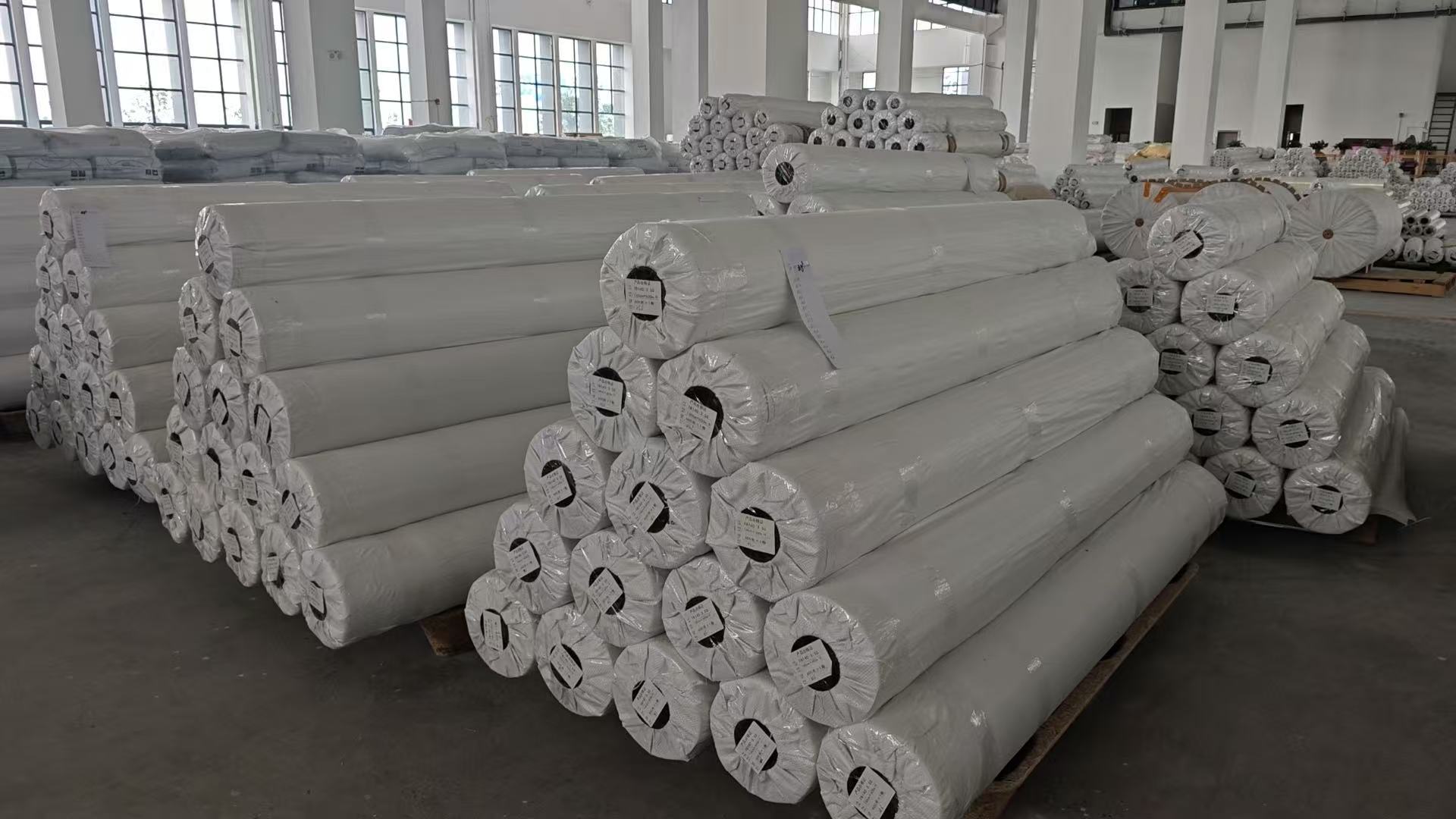
Teng Yang manufactures PO hot melt adhesive film in the following two basic formats, and custom-develops the melting point, thickness and width to fit your application, rather than expecting you to fit the application to a pre-existing spec sheet — a job using polyethylene hot melt adhesive, and a polypropylene job will seldom require the same melting point. When comparing prices of hot melt adhesive film across different suppliers, ensure the quotation clearly specifies the format and melting point it covers.
PO-SPEC_DOC.01
FIG 1.0
TYPE_A
Without Release Paper
Dry film wound direct on core; place directly between substrates, heat to activate. Lighter to handle; integrates with automated feed lines already configured for static and dust control.
TYPE_B
With Release Paper
Film with peel-off liner to protect it for die cutting, hand lay-up or in dusty shops, removed prior to activation.
Three-Layer Temperature Framework
The common, confusing “temperature” specification for hot melt films is precisely where issues arise. Many supplier spec sheets mention three different values within the same document without explaining what each value means. We quantify the performance of PO films against three distinct temperature parameters:
Temperature Type
What It Means
Industry Reference Range
Service temperature
Max sustained heat the finished bond withstands in use
up to ~100°C for standard-grade PO film[2]
Processing / melting temperature
Temperature at which the film itself melts during manufacturing (higher = more heat resistance, usually a trade-off against lower-temperature process compatibility)
~125–170°C depending on formulation[2]
Activation temperature
Minimum heat needed to trigger tack in application (iron, press, laminator)
above ~100°C for most PO grades[3]
IMPORTANT NOTE
These reference ranges are based on a single published industry data point for two Polifilm polyolefin-based hot melt film product types shown as illustrative of an industry range, not as a universal standard or as a tested claim for a specific Teng Yang grade. Actual melt/transition temperatures will vary by formulation and supplier; differential scanning calorimetry (DSC) according to ASTM D3418 / ISO 11357 is the standard method for characterizing these temperatures, and is documented by NIST as the routine thermoanalytical method for this class of polymer material. Consult your product technical data sheet for the precise melt point and activation temperature of the formulation you order.
Your PO film’s melt temperature, thickness, and width all factor into its ability to run cleanly in your laminator, heat press or extrusion coater – not simply its bonds in a hand-test. At Teng Yang, we tailor formulations and operate within or beyond the ranges depicted above based on the end application: lower melt temperature is ideal for heat-sensitive fabrics and foams; higher temperatures for industrial or automotive parts intended for high-heat service.
PO vs EVA vs TPU vs PA vs PES, Which Hot Melt Film Fits Your Application
01 // Market Analysis
Each hot melt film manufacturer that we researched carries multiple chemistries, yet not a single vendor such as doonx.com, gteek.com or hengningfilm.com displays a comparison across all five – forcing buyers to sift through five separate pages, because none of them operate the complete family of five under a single roof the way Teng Yang engineers and extrudes them.
Unlike a trading company that might present a mix of suppliers’ films on one site, Teng Yang formulates and extrudes all five chemistries at our Chongming, Shanghai plant; picking the wrong one is an expensive mistake once tooling is committed, so consider this the view from the inside – from the team you’d be speaking to on the phone about the right chemistry for your specific substrate and its service temperature. It’s not always the chemistry with the highest heat rating that wins – it’s whichever one actually keys into what you’re bonding.
02 // Polymer Selection
The chemistry-class properties shown above represent the polymer science inherent in each hot melt family and aren’t derived from a single test performed on all five chemistries; the thermal comparisons draw on the same NIST-documented DSC characterization method used in the Grades & Specifications section above, so treat this table as an initial screening tool and verify your particular grade against that section’s service range.
If your application actually needs the stretch-and-recovery performance in that TPU row above – stitch-free underwear, athletic footwear, compression activewear – our TPU hot melt adhesive film page covers that chemistry’s grade breakdown in full instead of the summary view here. For dry-cleaning and wash-durability-driven fabric bonding closer to the PES row above, our PES (copolyester) hot melt adhesive film page covers that chemistry’s specifications and application fit in full.
Low-surface-energy plastics nothing else bonds well
EVA (ethylene-vinyl acetate)
Paper, fabric, foam, wood
Lowest
Highest
General crafts & packaging, lowest melt point — acetate content trades chemical resistance for flexibility
PA (Polyamide)
Textile, embroidery, badges
Highest
Moderate
Dry-clean and high-heat garment applications
TPU (thermoplastic polyurethane)
Stretch fabric, leather, film laminates
High
Highest elasticity
Waterproof seams, outdoor gear, wash durability — TPU hot melt adhesive film outperforms PO here on stretch recovery
PES (Polyester)
Fabric blends, technical textiles
High
Low
Wash-fast color and dimensional stability
Where PO Hot Melt Film Performs, Automotive, Footwear & Industrial Laminating
The benefits of PO film’s inherent chemistry vary with vertical market segment: what’s considered a “strong” bond in footwear might be a failure waiting to happen in an automotive interior. We approach each application uniquely because the failure modes differ across industries.
Door panels, headliners and seat composites use a combination of laminate fabric, leather-look material or vinyl film laminated onto a polypropylene substrate, exactly the LSE-bonding scenario PO film is designed to handle. While automotive interior lamination is already a well-understood use case for hot melt films generally, PP substrate specifically is where PO really distinguishes itself from alternatives like EVA and PA. Because car interior panels endure significant cabin thermal cycling (often above 80°C) for years rather than weeks, heat resistance and bond-line thickness both play a bigger role here than in many soft-goods laminating jobs. While many PO film makers produce generic hot melt film for broad use, Teng Yang’s automotive-grade PO film is formulated specifically to handle that high-temperature, prolonged thermal exposure.
Sole components and synthetic leather uppers often combine a PO/PP/PE foam midsole with a layer of textile or leather, an unmatched pairing that trips up adhesives built for a single material family. PO film’s compatibility with both the plastic and textile sides lets converters run the same footwear line on just one adhesive.
Metal, glass and rubber bonding for signage, panel lamination and industrial assembly rely on PO’s wide substrate range, the same “bonds PE, PP and metal which common adhesives can’t bond efficiently” description independent PO suppliers use for this chemistry. Why? Because a mismatched adhesive on a signage panel fail in the field, not just in a lab test footnote. Bonding low surface energy materials isn’t nearly the solved problem that bonding high surface energy plastics (nylon, ABS, PVC) is, that gap is exactly why a hot melt film just for polyolefin exists as its own category rather than a footnote on a standard adhesive spec sheet. Using PO chemistry ensures you’ve gotten the material science side correct; to accomplish the most demanding bonds, combine it with some simple surface prep-or a quick check to make sure your materials are compatible before you go all in with your tooling-to cover the rest of the bases. And that’s what our complimentary material compatibility check tool below will do.
Teng Yang’s own manufacturing focus is reducing solvent-based glue dependence for customers who need cleaner, more stable bonding results. Adhesives generally remain a tracked VOC-source product category under EPA CTG guidance (EPA-453/R-08-005) — “solvent-free” describes formulation chemistry, not a zero-emissions claim. Bronze-tier qualitative positioning; request a technical data sheet for formulation-specific data.
When your customers order adhesive film for applications within a garment, shoe or automotive lining, there are usually two key items you’ll need to confirm, because a bad report on one will shut down your whole shipment at a customs spot check: solvent levels and restricted substance status. Ask any PO film vendor-even Teng Yang-this:
100% SolidsNo solvent carrier
Custom FormulationOEM & private label
Direct FactoryChongming, Shanghai
Export ReadyGlobal shipping
For EU-market buyers, restricted-substance compliance for adhesive articles runs through two frameworks worth knowing regardless of supplier: REACH Regulation (EC) No 1907/2006 Article 33, which requires disclosure when a Substance of Very High Concern (SVHC) exceeds 0.1% w/w in an article, and RoHS Directive 2011/65/EU Annex II, which sets maximum concentration thresholds for restricted substances such as lead (0.1%) and cadmium (0.01%) in homogeneous materials. The same EPA VOC-source classification referenced above (EPA-453/R-08-005) also applies to hot melt adhesives generally, regardless of destination market. Unlike a supplier who slaps a generic “eco-friendly” badge on a product page, Teng Yang will not claim a REACH or RoHS certificate number we have not actually published for this product line yet, ask us directly and we will confirm current documentation status for your order before you commit, because a badge without a document behind it is worse than no badge at all.
Need compliance documentation for your import process?
Procurement Guide, Custom Thickness, Pricing & Lead Time
// Cost Variables Analysis
Teng Yang won’t invent a per-kilogram price here – legitimate PO film pricing depends on real variables, and a supplier who quotes a flat number before knowing your specs is skipping steps you’d want them to take, because that “quick quote” usually gets revised once your actual thickness and volume come in.
What actually moves the number: Technical formulation strictly aligned to your processing machinery matrices.
VAR.01Thickness & Width
Thinner, narrower film costs less per square meter but may need tighter process control on your line.
VAR.02Melting Point
Melting point customization – a stock formulation ships faster than a custom-tuned melting point built for your specific substrate pairing.
VAR.03Order Volume
Order volume moves the number too – raw material purchasing efficiency scales with order size, same as any polymer converting business.
VAR.04Carrier Format
Format matters for cost: with or without release paper changes material input cost and packaging.
VAR.05HS Classification
Hot melt adhesive film HS code classification – confirm this with your freight forwarder before shipment; correct HS code selection affects duty rate and customs clearance speed on both ends.
VAR.06Macro-Market
Raw material market conditions are the biggest hidden factor. Polyolefin resin input costs are genuinely volatile: U.S. Bureau of Labor Statistics data shows the Producer Price Index for plastics Material and Resin Manufacturing moved from 303.5 to 377.7 between January and May 2026[4], and any film converter’s cost base – ours included – moves with it.
Ensure your Polyolefin (PO) adhesive film formulations meet strict industry standards, environmental regulations, and safety certifications for your specific application.
APP_02
LSE Substrate Diagnostic
Evaluate bonding viability on Low Surface Energy (LSE) materials. Identify required surface preparation steps and match them with appropriate Polyolefin (PO) adhesive film formulations.
APP_03
Format & Temp Advisor
Calculate the optimal film thickness, carrier format (with/without release paper), and activation temperature parameters based on your processing equipment and thermal cycling needs.
SYSTEM KNOWLEDGE BASE
Frequently Asked Questions
PO hot melt film is formulated from polyolefin resins – typically polyethylene, polypropylene and amorphous poly-alpha-olefin (APAO) – blended with tackifiers and stabilizers to control tack, open time and thermal stability.
Not quite. TPO is a specific polyolefin-based blend (often polypropylene plus an elastomer such as EPDM) most commonly associated with roofing membranes in construction. Polyolefin is the broader chemical family; our PO hot melt adhesive film is formulated for garment, footwear, automotive and industrial bonding, not roofing.
Most PO film grades activate above roughly 100°C, with processing/melting temperatures commonly in the 125–170°C range depending on formulation[2]see the Three-Layer Temperature Framework above for how service, processing and activation temperatures differ.
Cool, dry, away from direct sunlight and heat sources.
EVA has a lower melting point and higher flexibility, but weaker affinity for low-surface-energy plastics like PP and PE. PO’s chemical kinship to those substrates gives it a real bonding advantage specifically on polyolefin-family plastics and metal – not a universal upgrade over EVA everywhere.
If your substrate is anything other than plain PP, PE or metal – a coated, filled, or surface-treated variant, for example – yes. Send us the material spec via the free compatibility check above before committing to a production run.
The release paper-backed version is easiest to hand lay or die-cut in dustier shop conditions; you peel the liner right before heating. Film with no release paper eliminates that process and is great for automatic feed lines that manage static and debris well. In fact, for hobbyist-level or small production run applications, heat activation is truly that simple – heat it with a hair dryer or a household iron set to low on a PP/PE-safe setting, which is sufficient to tack a small patch, though production runs should use a controlled press or laminator to ensure consistent bond-line thickness.
In most PP/PE/metal bonding applications, the answer is yes – PO film is a 100% solids product with no solvent carrier to flash off, which is exactly why manufacturers use it in lieu of solvent-based glues.
Yes, please contact Betty Fang directly to review your program.




![Adhesive Web Basis Weight Selection [Guide]](https://tengyangfilm.com/wp-content/uploads/2026/09/adhesive-web-basis-weight-selection-featured-150x150.png.webp)
![Hot Melt Adhesive Char Buildup Causes [Fix Guide]](https://tengyangfilm.com/wp-content/uploads/2026/09/hot-melt-adhesive-char-buildup-causes-featured-1-150x150.png.webp)


